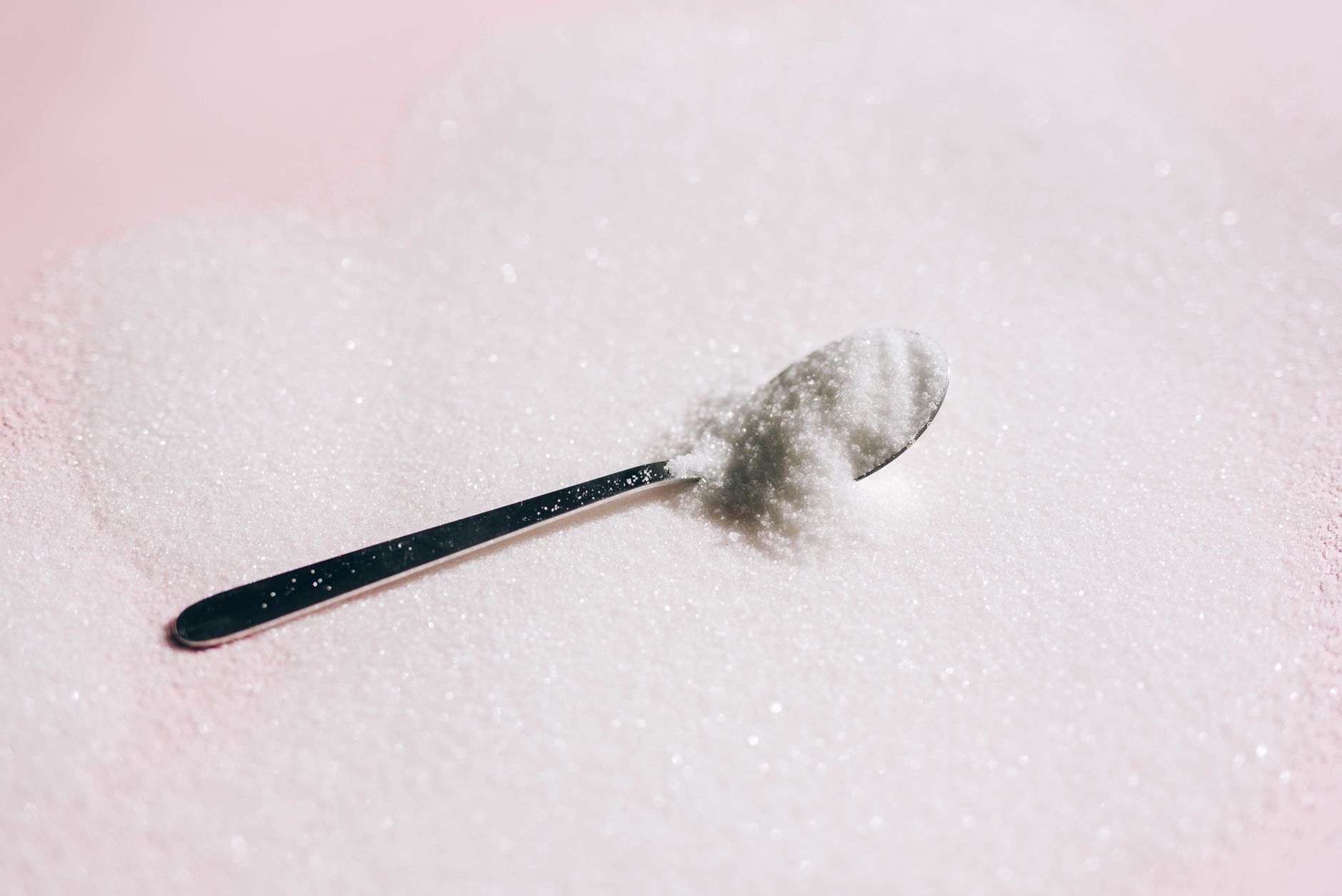
White sugar substitutes
White sugar provides sweetness, structure, and moisture retention in baked goods, and it caramelizes at around 320°F (160°C) to add color and flavor. In creaming methods, its sharp crystals aerate butter by cutting air pockets — a mechanical role that liquid sweeteners cannot replicate. Substituting requires adjusting both sweetness level and liquid balance, and some alternatives alter color, flavor, or spread significantly.
Some links below are paid affiliate links. As an Amazon Associate, AltPantry earns from qualifying purchases at no extra cost to you.
| Rank | Substitute | Substitution ratio | What to expect |
|---|---|---|---|
| #1 | Light brown sugar or dark brown sugar | 1 cup white sugar = 1 cup brown sugar (packed) | Brown sugar is white sugar with molasses added back in — it swaps 1:1 by volume but adds a mild (light) or pronounced (dark) molasses flavor and slightly more moisture, which can make cookies chewier and cakes denser by a small but noticeable margin. |
| #2 | Cane sugar or raw turbinado sugar | 1 cup white sugar = 1 cup cane sugar or raw turbinado sugar | Minimally processed cane sugars dissolve and cream similarly to white sugar; turbinado's larger crystals dissolve more slowly, so it works best in recipes where the batter has enough liquid and mixing time — avoid it in delicate meringues or frostings where undissolved grains are a problem. |
| #3 | Honey | 1 cup white sugar = 3/4 cup honey; reduce other liquids by 3 tbsp and add 1/4 tsp baking soda per cup substituted | Honey is sweeter than sugar by weight and adds significant moisture and a distinct floral flavor; the added baking soda neutralizes honey's acidity and helps browning, but results will be noticeably moister and denser than the original — widely tested and reliable, but the flavor change is real. |
| #4 | Pure maple syrup | 1 cup white sugar = 3/4 cup maple syrup; reduce other liquids by 3 tbsp | Maple syrup swaps similarly to honey but with a distinct maple flavor; it works well in quick breads, muffins, and cookies but will brown faster in the oven, so reduce oven temperature by 25°F (15°C) and watch closely. |
| #5 | Coconut sugar | 1 cup white sugar = 1 cup coconut sugar | Coconut sugar is a direct 1:1 swap by volume and behaves similarly to brown sugar — it adds a mild caramel-molasses flavor and produces slightly darker results; it does not dissolve as smoothly as white sugar, so it can leave a faintly grainy texture in frostings or very fine-crumb cakes. |
| #6 | Agave nectar | 1 cup white sugar = 2/3 cup agave nectar; reduce other liquids by 1/4 cup | Agave is sweeter than sugar and very liquid, with a mild neutral flavor — it works in a pinch but noticeably increases moistness and can make baked goods gummy if not adjusted carefully; it lacks the crystalline structure for creaming and is not a strong choice for anything where texture precision matters. |
Substituting for a specific recipe?
The best substitute depends on what you're making. Pick your use case:
When to be careful
Liquid sweeteners (honey, maple syrup, agave) cannot replicate the creaming function of white sugar — any recipe that depends on the butter-sugar creaming method for lift, such as pound cakes or layer cakes, will lose structural integrity and rise noticeably less. Recipes with very few ingredients where sugar provides most of the bulk, like simple shortbread or classic meringue, are poor candidates for substitution.
Why these substitutes work
White sugar is sucrose, a disaccharide that dissolves readily in water and denatures proteins during baking to set structure. Its hygroscopic nature — the tendency to attract and hold water — controls moisture retention in finished baked goods. Liquid sweeteners already contain water, which is why reducing other liquids is required; brown sugar and coconut sugar share sucrose's basic crystalline chemistry but carry additional compounds (molasses, amino acids) that alter Maillard browning and final texture.
For most everyday swaps — cookies, muffins, quick breads, simple cakes — brown sugar or coconut sugar are the most reliable choices because they behave like white sugar in the oven without requiring liquid adjustments. The flavor difference with light brown sugar is subtle enough that most people won’t notice it in a spiced recipe or anything with chocolate.
Liquid sweeteners (honey, maple syrup) are fully viable but require three simultaneous adjustments: reduced liquid, added baking soda, and a lower oven temperature. Skipping any one of these is the most common failure mode. If you’re substituting in a recipe that creams butter and sugar together for lift, none of these options will fully replicate what white sugar does mechanically — expect a denser result and plan accordingly.
Frequently asked questions
- Can I substitute honey for white sugar in all baking recipes?
- In most quick breads, muffins, and cookies, yes — use 3/4 cup honey per 1 cup sugar, reduce other liquids by 3 tbsp, add 1/4 tsp baking soda, and lower oven temperature by 25°F. It does not work well as a straight swap in creamed-butter cakes or meringues.
- Does brown sugar work as a 1:1 substitute for white sugar?
- By volume, yes. The flavor will have a light molasses note and the texture of cookies or cakes will be slightly chewier and moister — often acceptable or even preferred, but not identical. Use light brown sugar if you want the smallest flavor difference.
- Can I use coconut sugar instead of white sugar for diabetic or lower-glycemic baking?
- Coconut sugar has a marginally lower glycemic index than white sugar, but the difference is small and contested by nutritionists. It does swap 1:1 by volume and performs adequately in most recipes, but it should not be treated as a diabetic-safe ingredient without medical guidance.