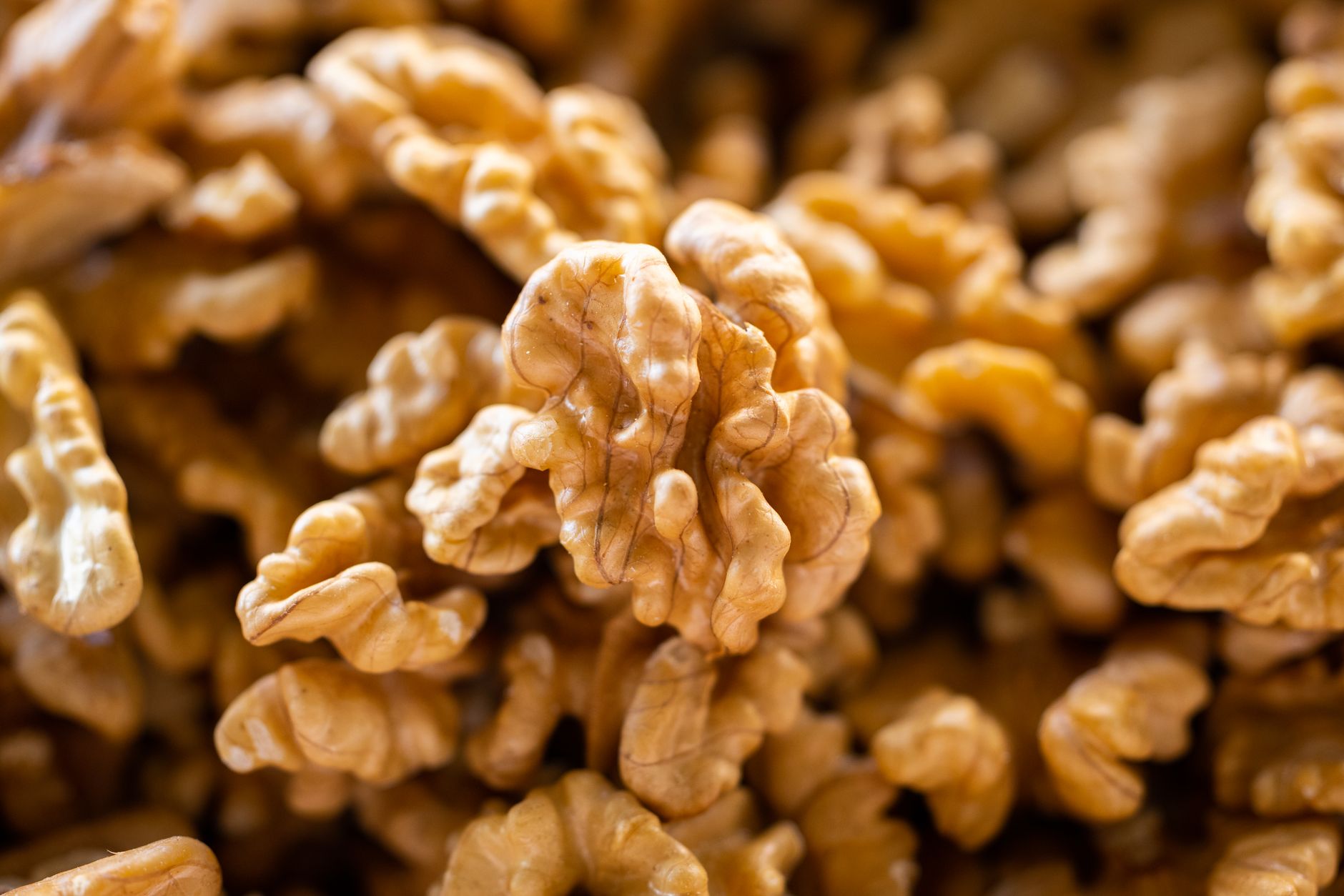
Walnuts substitutes
Walnuts contribute a mild bitterness, earthy richness, and firm-yet-tender crunch to recipes. In baked goods they also release oils during cooking that affect crumb moisture. Substituting requires matching fat content, texture, and — where walnuts are a flavor anchor, like in a walnut brownie — flavor profile as closely as possible.
Some links below are paid affiliate links. As an Amazon Associate, AltPantry earns from qualifying purchases at no extra cost to you.
| Rank | Substitute | Substitution ratio | What to expect |
|---|---|---|---|
| #1 | Pecans | 1:1 by volume or weight | The closest structural and flavor match — similar fat content, comparable crunch, and a slightly sweeter, less bitter profile that works in virtually every walnut application from banana bread to salads. |
| #2 | Almonds (raw or toasted, roughly chopped) | 1:1 by volume or weight | Firmer texture and more neutral flavor than walnuts; works well in baked goods and grain salads, but the harder crunch can feel out of place in recipes where walnuts are meant to stay soft after baking. |
| #3 | Cashews (raw, roughly chopped) | 1:1 by volume or weight | Softer crunch and buttery, mild flavor — a good choice when the walnut's bitterness would be missed least, such as in cookies or quick breads, but the reduced crunch is noticeable in applications like toppings or salads. |
| #4 | Hazelnuts (skins removed, roughly chopped) | 1:1 by volume or weight | Strong, distinctive flavor that works well in chocolate-based recipes and some baked goods, but can overwhelm neutral dishes; remove skins by toasting at 350°F for 10–12 minutes then rubbing in a towel, otherwise bitterness compounds. |
| #5 | Sunflower seeds (raw or toasted, hulled) | 3/4 cup sunflower seeds per 1 cup walnuts | A practical nut-free swap that holds up reasonably in baked goods and grain bowls; texture is notably smaller and the flavor is mild-to-grassy rather than rich — works in a pinch but is noticeably different. |
| #6 | Pumpkin seeds (pepitas, hulled) | 3/4 cup pepitas per 1 cup walnuts | Nut-free and allergy-friendly; toasting beforehand is essential to develop any depth of flavor — raw pepitas taste flat in most applications. The result is acceptable in salads and muffins but significantly lighter in richness than walnuts. |
When to be careful
If walnuts are the named, central ingredient — walnut cake, walnut pesto, baklava with walnut filling — no substitute will replicate the specific bitter, tannin-forward flavor. In those cases, the recipe will taste like a different dish, not a version of the original.
Why these substitutes work
Walnuts are roughly 65% fat by weight, predominantly polyunsaturated (linoleic and alpha-linolenic acid), which contributes to their oil-rich crumb interaction in baked goods and their tendency to turn rancid faster than other nuts. Their characteristic slight bitterness comes from tannins concentrated just under the papery skin. Substitutes work best when they match fat content (pecans, hazelnuts) rather than just shape, since it's the fat that most directly affects crumb texture and mouthfeel in baked applications.
Pecans are the clear first choice here and the one most experienced bakers and cooks would reach for without hesitation — the fat content, crunch, and baking behavior are close enough that most people wouldn’t flag a difference in finished banana bread, brownies, or roasted salads. The table above is ranked by how closely each substitute replicates both texture and richness; flavor divergence increases as you move down the list.
For nut-free situations, sunflower seeds and pepitas are workable in supporting roles (mixed into muffins, scattered on a grain bowl) but shouldn’t be treated as true equivalents — the richness gap is real. If walnuts are the star of the dish, consider whether the recipe is worth making without them rather than substituting down.
Frequently asked questions
- Can I substitute walnuts 1:1 in banana bread?
- Yes. Pecans are the best 1:1 swap and produce nearly identical results in texture and rise. Chopped almonds also work at 1:1 but stay firmer in the finished loaf.
- Do I need to toast the substitute nut before using it?
- Only if the original recipe calls for toasted walnuts. Toasting any nut deepens flavor by driving off moisture and promoting browning reactions — skip it if the recipe uses raw walnuts and you're baking them into a batter, since they'll toast in the oven anyway.
- What's the best nut-free walnut substitute for allergies?
- Toasted sunflower seeds or toasted pepitas are the most widely recommended nut-free options. Use 3/4 cup per 1 cup of walnuts called for. Both produce noticeably lighter, less rich results — set that expectation before serving.