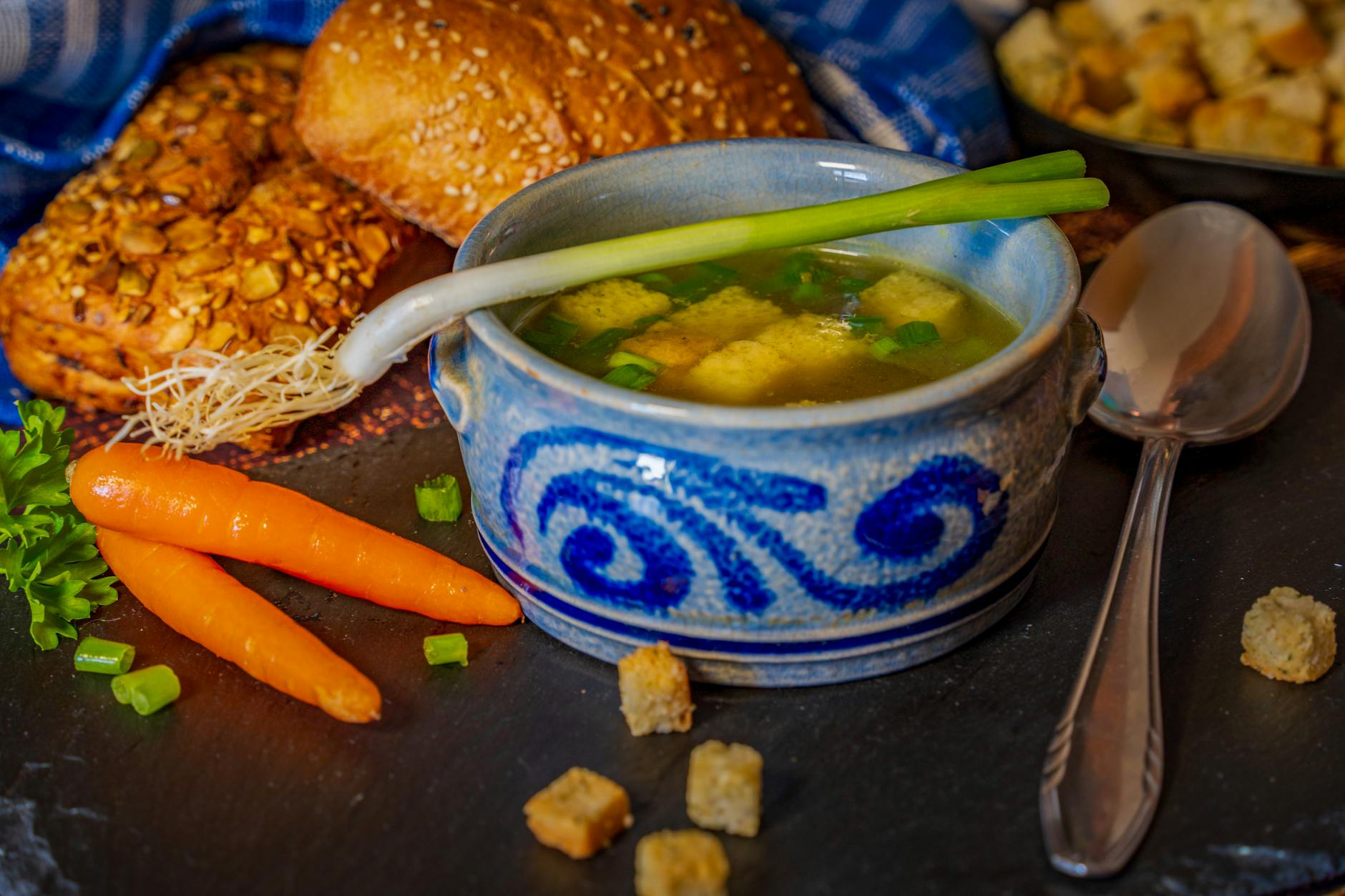
Vegetable broth substitutes
Vegetable broth adds liquid volume, mild savory depth, and a small amount of dissolved solids that contribute body to soups, grains, risottos, and braises. Because it's relatively neutral compared to meat stocks, substituting is more forgiving — but the substitute still needs to supply both liquid and some umami or mineral character to avoid a flat result. Plain water works in a pinch but will noticeably reduce depth in any dish where broth is a primary flavor component.
Some links below are paid affiliate links. As an Amazon Associate, AltPantry earns from qualifying purchases at no extra cost to you.
| Rank | Substitute | Substitution ratio | What to expect |
|---|---|---|---|
| #1 | Chicken broth or chicken stock | 1 cup chicken broth for every 1 cup vegetable broth | Produces a richer, meatier result that works well in most applications; not suitable for vegetarian or vegan dishes, and will override delicate vegetable flavors in lighter soups. |
| #2 | Mushroom broth | 1 cup mushroom broth for every 1 cup vegetable broth | Stays vegetarian and adds stronger umami than standard vegetable broth; works best in earthy dishes (risotto, lentil soup, braises) but can make delicate vegetable soups taste muddy. |
| #3 | Water plus soy sauce | 1 cup water + 1 tsp low-sodium soy sauce per 1 cup vegetable broth | Soy sauce contributes glutamates that approximate the savory baseline of broth; keep the soy sauce quantity modest or the dish will taste noticeably of soy and may become too salty. |
| #4 | Water plus miso paste | 1 cup water + 1 tsp white or yellow miso per 1 cup vegetable broth | Miso dissolves into water and contributes both salt and fermented umami; white miso is the most neutral choice; don't boil the mixture hard once miso is added or flavor will flatten. |
| #5 | Vegetable bouillon cube or paste dissolved in water | 1 cup boiling water + amount of bouillon specified on package (typically 1/2 to 1 tsp paste or 1/2 cube) per 1 cup vegetable broth | A reliable pantry fallback that produces results close to carton broth; sodium levels vary widely by brand, so taste and adjust salt in the recipe before adding more. |
| #6 | Water | 1 cup water for every 1 cup vegetable broth | Works in a pinch when broth is purely a cooking liquid (steaming grains, thinning a sauce), but in soups, risottos, or braises where broth is a flavor base, the result is noticeably flat and requires extra seasoning to compensate. |
When to be careful
In dishes where vegetable broth is the primary flavor source — French onion-style vegetable soups, broth-forward Asian noodle soups, or light spring vegetable bisques — no substitute will fully replicate the specific vegetal sweetness of a well-made vegetable broth. Recipes calling for more than 4 cups of broth as a main component will show substitution gaps most clearly.
Why these substitutes work
Vegetable broth contributes water as the primary solvent, plus a small concentration of dissolved sugars, minerals, and glutamates extracted from cooked vegetables. These dissolved compounds lower the perceived harshness of raw starches and proteins during cooking and raise the overall savoriness of a dish through glutamate-driven umami response. Substitutes that supply glutamates — miso, soy sauce, mushroom broth — replicate this mechanism most closely; plain water supplies the liquid volume but none of the dissolved solids.
For most recipes, chicken broth (rank 1) is the simplest drop-in swap if vegetarian restrictions aren’t a concern — it’s widely available, consistent in quality, and produces a reliably savory result. If you need to stay plant-based, mushroom broth (rank 2) is the highest-confidence vegetarian option, and the water-plus-miso combination (rank 4) is a good on-the-spot fix when no broth at all is on hand.
The substitutes in the table are ordered by how closely they replicate the functional role of vegetable broth — both the liquid volume and the savory depth. Water alone (rank 6) should be a last resort and only in recipes where broth is a minor supporting liquid rather than a flavor base. Whichever substitute you use, taste the dish earlier than usual and adjust salt carefully, since bouillon, soy sauce, and miso all add sodium that your original recipe may not have accounted for.
Frequently asked questions
- Can I use beef broth instead of vegetable broth?
- Yes, in terms of liquid function, but beef broth has a strong, distinctly meaty flavor that will dominate lighter dishes and makes the recipe unsuitable for vegetarians. Use it only in hearty braises or stews where the beef flavor won't be out of place.
- Is vegetable bouillon the same as vegetable broth?
- Not exactly. Bouillon is a concentrated form — paste, cube, or powder — that must be dissolved in water. The flavor profile is similar but typically saltier and more intensely savory. Always follow the package dilution ratio and reduce added salt in your recipe accordingly.
- Does the substitute matter if I'm only using 1/4 cup of vegetable broth to deglaze a pan?
- In small quantities used for deglazing or loosening a sauce, plain water or any of the listed substitutes will work without a noticeable difference in the finished dish. The flavor impact of 1/4 cup of broth versus water is minimal once other seasonings are present.