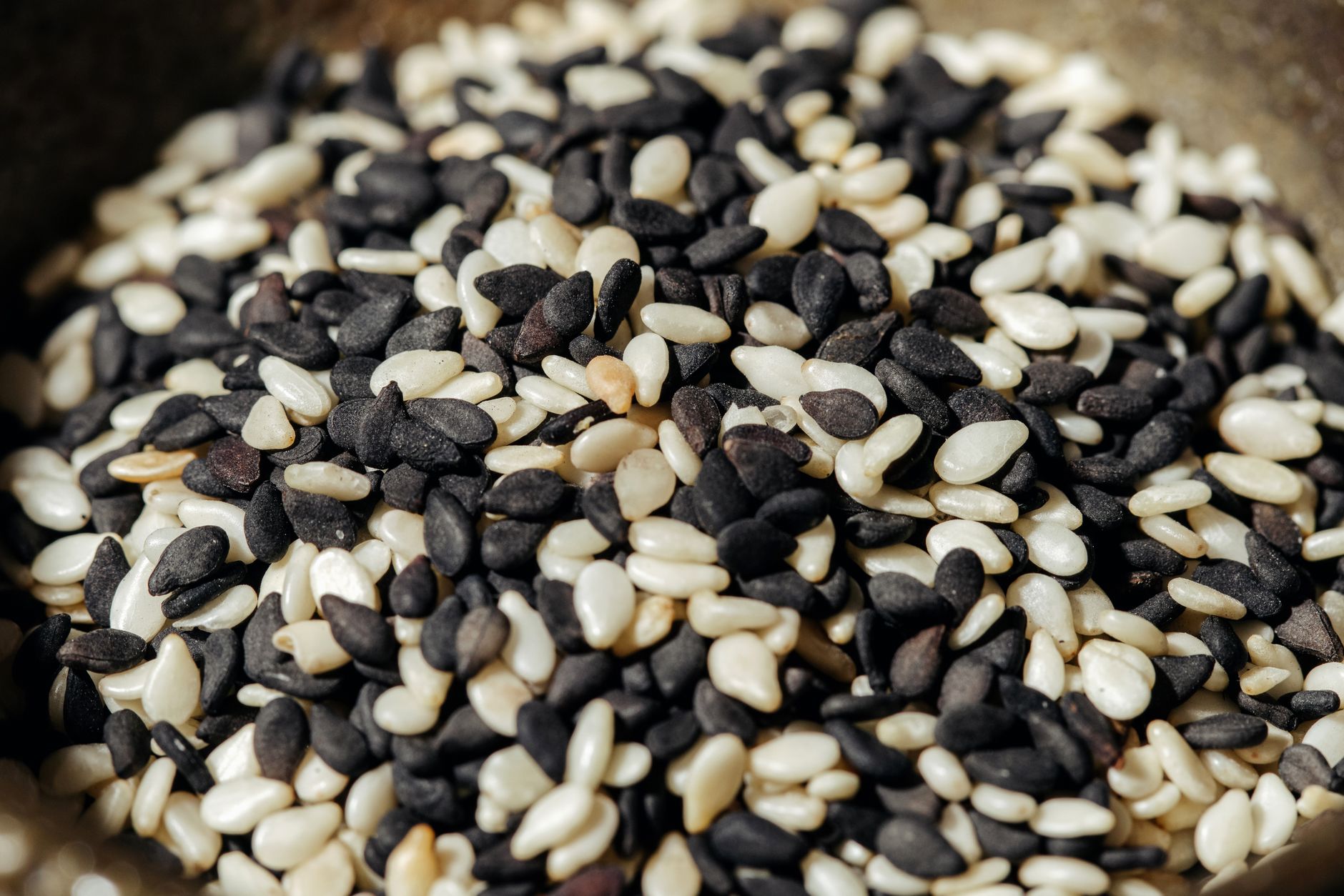
Sesame seeds substitutes
Sesame seeds contribute a mild, nutty flavor, a slight crunch, and visual contrast as a finishing or coating ingredient. In baked goods, they add texture and a toasted note that develops further in the oven; in Asian-style dishes, they often provide both flavor and an aromatic quality released by light toasting. Substituting requires matching two separate properties — texture and flavor — and most alternatives only partially replicate both.
Some links below are paid affiliate links. As an Amazon Associate, AltPantry earns from qualifying purchases at no extra cost to you.
| Rank | Substitute | Substitution ratio | What to expect |
|---|---|---|---|
| #1 | Poppy seeds | Use a 1:1 ratio by volume (e.g., 1 tbsp poppy seeds per 1 tbsp sesame seeds) | The closest structural match — same small size, similar crunch, and comparable behavior in baking; flavor is milder and slightly less nutty, but the result is rarely noticeable in breads, rolls, or salad dressings. |
| #2 | Toasted sunflower seeds (hulled) | Use 1 tbsp finely chopped toasted sunflower seeds per 1 tbsp sesame seeds | Delivers a comparable nutty, toasted flavor with good crunch; chop before using or the larger size will look and feel out of place in most applications — not suitable for very fine coatings or doughs where sesame blends in. |
| #3 | Toasted hemp seeds (hulled hemp hearts) | Use a 1:1 ratio by volume (e.g., 1 tbsp hemp hearts per 1 tbsp sesame seeds) | Mild, slightly nutty flavor and soft texture that works as a finishing seed; lacks the crunch of sesame since hemp hearts are softer, so results will be less crisp on crusts or coatings. |
| #4 | Flaxseeds (whole) | Use a 1:1 ratio by volume (e.g., 1 tbsp flaxseeds per 1 tbsp sesame seeds) | Works in a pinch for visual and textural presence in breads and crackers, but the flavor is earthier and more assertive than sesame — a noticeable difference in mild or delicate recipes. |
| #5 | Tahini (sesame paste) | Use 1 tsp tahini to replace 1 tbsp sesame seeds in sauces, dressings, or dips only | Captures sesame flavor well in liquid or semi-liquid applications, but adds fat and moisture that will disrupt dry rubs, doughs, or toppings — do not use as a 1:1 substitute anywhere a solid seed is needed for structure or garnish. |
When to be careful
Sesame seeds are irreplaceable in recipes where their specific flavor is central to the dish's identity — tahini-heavy Middle Eastern preparations, goma (sesame) sauces in Japanese cooking, or sesame candy (brittle) where the seed is the primary ingredient. In these cases, no substitute produces an authentic result.
Why these substitutes work
The distinctive flavor of sesame seeds comes primarily from lignans (sesamol, sesamolin) and pyrazine compounds that develop during toasting through Maillard reactions. These aromatic compounds are relatively unique among common seeds, which is why most substitutes match the texture but not the full flavor profile. The high polyunsaturated fat content in sesame seeds also contributes to their rich mouthfeel when bitten into, something poppy seeds replicate structurally but not in exact fatty-acid composition.
Poppy seeds are the most reliable drop-in for most Western baking contexts — breads, rolls, salad dressings, and crackers — because they match sesame’s small size and crunch almost exactly, even if the flavor is less pronounced. For recipes where sesame’s nutty, toasted character is more central (stir-fries, Asian noodle dishes, finishing garnishes), toasted and chopped sunflower seeds get you closer on flavor, at the cost of some visual incongruity.
No substitute listed here fully replicates sesame seeds when both flavor and texture matter equally — that combination is fairly unique. Use the table above to identify which property matters most in your specific recipe and choose accordingly.
Frequently asked questions
- Can I use sesame oil instead of sesame seeds?
- In dressings, marinades, or finished dishes where you want sesame flavor, yes — use 1/4 to 1/2 tsp toasted sesame oil to replace 1 tbsp sesame seeds. It won't work as a structural or textural substitute in coatings, breads, or anywhere you need a solid seed.
- Are black sesame seeds and white sesame seeds interchangeable?
- Yes, in a 1:1 ratio for most purposes. Black sesame seeds have a slightly more intense, bitter-edged flavor and will visually darken a dish. In flavor-forward applications the difference is small; in presentations where color matters, it's significant.
- Do I need to toast sesame seeds before using them as a substitute in cooking?
- If the recipe calls for toasted sesame seeds, toast your substitute too — spread seeds in a dry skillet over medium heat for 2–3 minutes, stirring frequently, until golden and fragrant. Raw seeds of any kind have a flatter, more neutral taste and won't replicate the toasted sesame flavor profile.