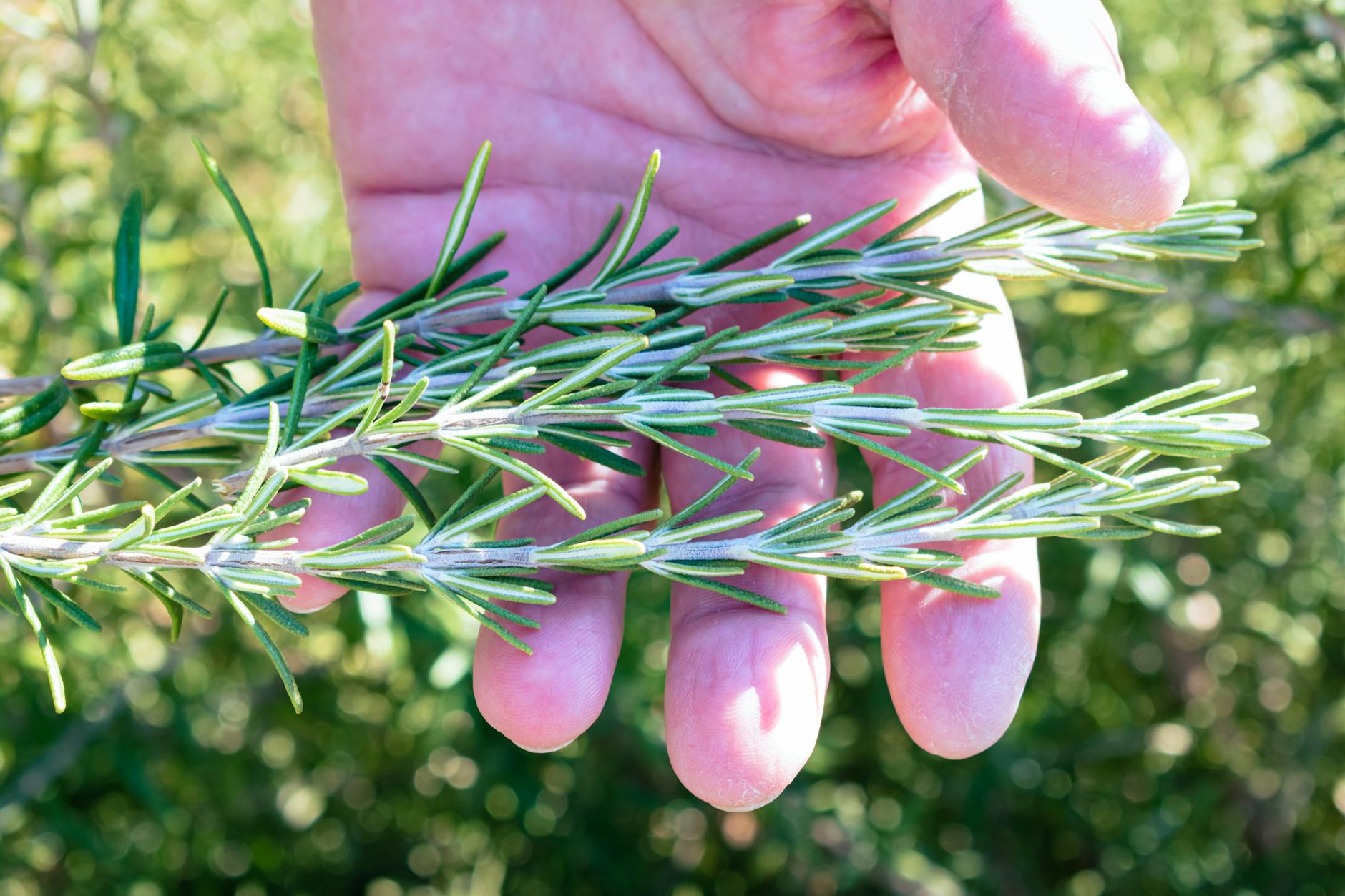
Rosemary substitutes
Rosemary contributes a sharp, piney, camphor-forward flavor along with mild bitterness and a resinous aroma that holds up under high heat and long cooking times. Its flavor is assertive enough that even small amounts reshape a dish noticeably, which means substitutes need to be chosen and measured carefully. Most alternatives capture part of rosemary's profile but not all of it, so the best match depends on your specific recipe and cooking method.
Some links below are paid affiliate links. As an Amazon Associate, AltPantry earns from qualifying purchases at no extra cost to you.
| Rank | Substitute | Substitution ratio | What to expect |
|---|---|---|---|
| #1 | Thyme (fresh or dried) | Use equal amounts of fresh thyme for fresh rosemary, or equal amounts of dried thyme for dried rosemary (1:1 by volume) | Thyme shares rosemary's earthy, herbal character and the same tolerance for heat, making it the most reliable swap in roasted meats, potatoes, and stocks where rosemary's pine note matters less than its savory depth. |
| #2 | Dried rosemary | Use 1 tsp dried rosemary for every 1 tbsp fresh rosemary (1:3 by volume) | If you have dried on hand instead of fresh (or vice versa), this is the direct conversion — dried is more concentrated; crumble it between your fingers before adding to release more aroma. |
| #3 | Sage (fresh or dried) | Use 3/4 the amount called for: e.g., 1 tbsp fresh rosemary → 2¼ tsp fresh sage; 1 tsp dried rosemary → ¾ tsp dried sage | Sage brings a similarly resinous, woody quality that works well in pork, poultry, and bean dishes, but its flavor is more musky and less sharp than rosemary — use slightly less to avoid overpowering the dish. |
| #4 | Savory (winter savory or summer savory, dried) | Use equal amounts: 1 tsp dried rosemary → 1 tsp dried savory | Winter savory in particular has a piney, peppery bite that comes closer to rosemary than most herbs; it's well-tested in lamb and bean preparations and holds up to roasting, though it's harder to find than thyme or sage. |
| #5 | Herbes de Provence | Use 1½ tsp herbes de Provence blend for every 1 tsp dried rosemary called for | This blend typically contains rosemary, thyme, savory, and marjoram, so it approximates rosemary's role while adding complexity — works well in braises, roasted vegetables, and chicken, but introduces additional flavors that may not suit every dish. |
When to be careful
Rosemary-forward recipes — focaccia with rosemary, rosemary-infused olive oil, or a dish where rosemary is the named centerpiece flavor — won't read the same with any substitute. In those cases, the piney, camphor note is the point, and no other common herb replicates it closely enough to justify substitution.
Why these substitutes work
Rosemary's dominant aroma compounds are 1,8-cineole (eucalyptus-like, camphoraceous), α-pinene (piney), and camphor. These volatile compounds are fat-soluble and relatively heat-stable, which is why rosemary works so well in roasting and slow cooking — the oils infuse into fat-based cooking mediums without breaking down quickly. Thyme shares several of these terpene compounds (including cineole and thymol, a related monoterpene), which is why it remains the closest functional match; sage and savory also contain cineole and borneol, giving them a partial overlap in the resinous, woody register.
Among these options, thyme is the right default when you need a substitute without thinking too hard about it — the flavor overlap is the strongest, it behaves similarly in heat, and it’s almost always in the pantry already. Dried rosemary in place of fresh (or vice versa) isn’t really a substitute so much as a standard kitchen conversion, and it’s worth knowing that ratio precisely since overbearing dried rosemary is a common mistake.
If the recipe leans toward lamb, pork, or white beans, sage or savory are worth considering over thyme — their resinous edge sits closer to rosemary in those pairings. Herbes de Provence is a useful fallback for anything roasted or braised, but check the label first: blend compositions vary by brand, and some are heavier on lavender, which can push the dish in a noticeably different direction.
Frequently asked questions
- Can I use Italian seasoning as a rosemary substitute?
- In a pinch, yes — Italian seasoning typically contains rosemary along with oregano, basil, and thyme, so it carries some of the same notes. Use about 1½ tsp Italian seasoning for every 1 tsp dried rosemary, but expect the overall flavor to shift noticeably toward a more oregano-forward, Mediterranean blend.
- Does fresh rosemary substitute 1:1 for dried rosemary?
- No. Fresh rosemary is less concentrated. Use 1 tbsp fresh rosemary to replace 1 tsp dried rosemary. Going the other direction, use 1 tsp dried for every 1 tbsp fresh.
- Can I substitute rosemary with marjoram or oregano?
- Oregano and marjoram are both too floral and sweet — they don't have the piney, camphor quality that rosemary brings. They work fine as general herb substitutes in Italian-style cooking, but they'll shift the flavor profile meaningfully. Use them only if thyme, sage, or savory aren't available and the rosemary is a supporting herb rather than a primary flavor.