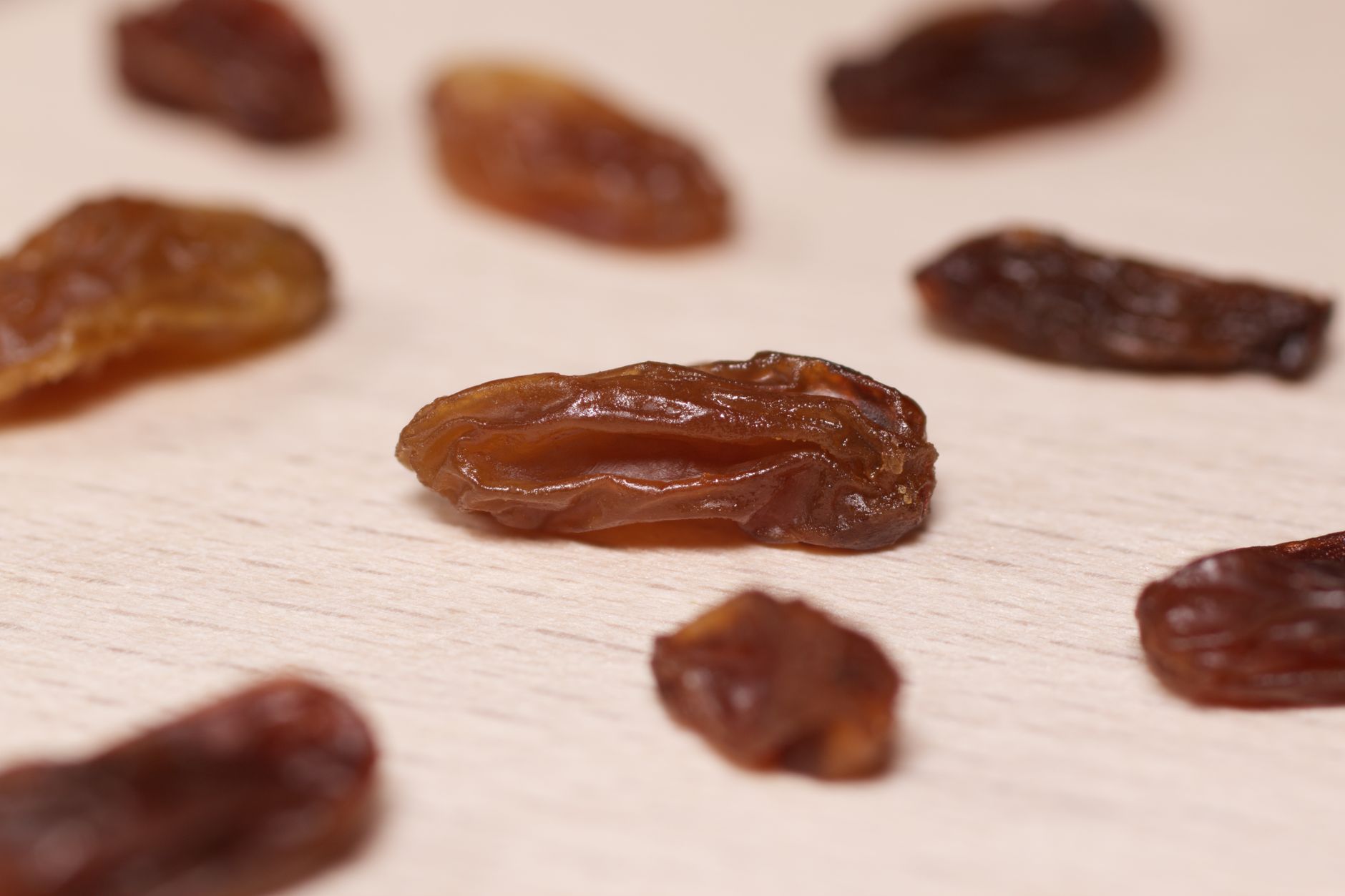
Raisins substitutes
Raisins contribute concentrated sweetness, a chewy texture, and a mild tartness that balances rich or spiced recipes. They also carry moisture — when baked into bread or cookies, they release it slowly, keeping the crumb soft. Substituting requires matching all three properties — sugar content, texture, and moisture — not just sweetness alone.
Some links below are paid affiliate links. As an Amazon Associate, AltPantry earns from qualifying purchases at no extra cost to you.
| Rank | Substitute | Substitution ratio | What to expect |
|---|---|---|---|
| #1 | Dried currants | Use 1:1 by volume (e.g., 1 cup dried currants for 1 cup raisins) | Closest match in flavor profile and moisture level; currants are smaller and slightly tarter, but perform identically in baking and work well in savory applications like chutneys and grain salads. |
| #2 | Dried cranberries | Use 1:1 by volume (e.g., 1 cup dried cranberries for 1 cup raisins) | More tart and often sweetened with added sugar, so the overall dish will be slightly sweeter and more acidic; the texture holds up well in baking but the flavor shift is noticeable in recipes where raisins are the dominant fruit note. |
| #3 | Dried cherries | Use 1:1 by volume (e.g., 1 cup dried cherries for 1 cup raisins) | Tart dried cherries add a stronger, more assertive fruit flavor; they work best in oatmeal cookies, granola, and trail mix where a bolder swap is welcome, but can overwhelm mild breads and cakes. |
| #4 | Dried dates (chopped) | Use 3/4 cup pitted, roughly chopped dried dates for 1 cup raisins | Much sweeter and stickier than raisins, with a caramel-like depth; chop to roughly raisin-size pieces and reduce any added sugar in the recipe by 1–2 tsp to compensate — works in a pinch but the texture difference is noticeable. |
| #5 | Dried apricots (chopped) | Use 3/4 cup roughly chopped dried apricots for 1 cup raisins | Less sweet and more tangy than raisins, with a chewier, firmer bite that doesn't fully soften during baking; works acceptably in scones and quick breads but the texture stays slightly tougher than raisins would. |
When to be careful
In recipes where raisins are the structural or visual centerpiece — such as traditional rum raisin ice cream, classic Irish soda bread, or Eccles cakes — no substitute fully replicates the specific flavor. The substitution also fails in wine-based or cognac-soaked preparations where the raisin's particular tannin profile is part of the dish's identity.
Why these substitutes work
Raisins are grapes with roughly 72% of their water removed, concentrating sugars (primarily glucose and fructose) to around 59–75 g per 100 g. This high sugar concentration gives them hygroscopic properties — they absorb and hold moisture from surrounding dough or batter, which is why baked goods stay soft longer. The substitutes above work because they share the same dried-fruit mechanism: concentrated sugars, low water activity, and a cell structure that slowly releases moisture under heat.
For most baking — oatmeal cookies, cinnamon rolls, breads, and grain salads — dried currants are the straightforward swap. They behave nearly identically to raisins in the oven and require no ratio adjustment. If currants aren’t available, dried cranberries are the next most reliable choice, though you should expect a slightly tarter, sweeter result and may want to cut added sugar by a small amount.
Chopped dates and apricots are honest fallbacks when nothing else is on hand, but neither produces a seamless result. Dates skew rich and sticky; apricots stay firmer than raisins even after baking. Use them when the recipe is forgiving — a hearty granola bar or a rustic quick bread — rather than in anything where the fruit texture is a key part of the final product.
Frequently asked questions
- Can I use fresh grapes instead of raisins in baking?
- Not reliably. Fresh grapes contain roughly 80% water versus raisins' 15–20%, so they'll release excess liquid into batter, alter the structure, and provide almost none of the concentrated sweetness. They're not a workable substitute in most baked goods.
- Do I need to soak dried fruit substitutes before using them?
- Only if the original recipe calls for soaking raisins, or if the dried fruit you're using is particularly hard or dry. For most baking, unsoaked dried cranberries, currants, or cherries perform fine. If in doubt, a 10-minute soak in warm water or juice and a thorough drain brings most dried fruits to a comparable moisture level.
- Can I substitute raisins with chocolate chips in cookies?
- Yes in terms of texture and ratio (1:1), but the result is a fundamentally different cookie. Chocolate chips add fat and cocoa solids; they don't contribute the tartness, chewiness, or moisture-retention that raisins provide. It's a valid choice if you simply want to omit raisins, not a flavor-matched substitute.