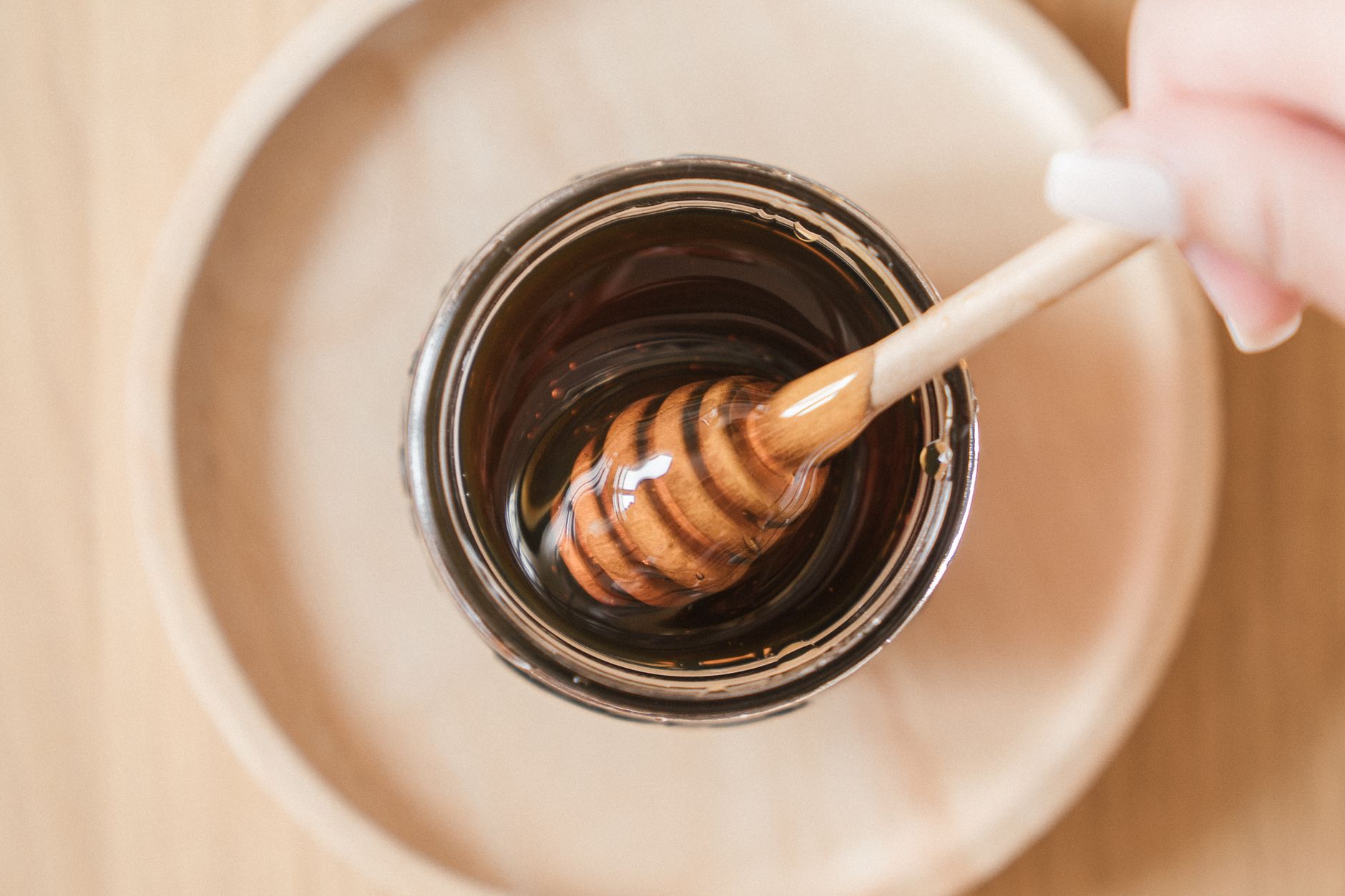
Honey substitutes
Honey contributes sweetness, moisture retention, and a distinctly floral or earthy flavor depending on variety. It is also mildly acidic and hygroscopic, meaning it attracts water from the air and keeps baked goods softer longer. Substituting requires matching not just sweetness but also liquid volume, browning behavior, and in some cases acidity — no single swap covers all of these perfectly.
Some links below are paid affiliate links. As an Amazon Associate, AltPantry earns from qualifying purchases at no extra cost to you.
| Rank | Substitute | Substitution ratio | What to expect |
|---|---|---|---|
| #1 | Maple syrup | 1 cup maple syrup per 1 cup honey (1:1) | The closest match in texture, viscosity, and moisture behavior; flavor shifts to maple, which is noticeable in delicate recipes but works well in most baked goods, marinades, and glazes. |
| #2 | Agave nectar | 3/4 cup agave nectar per 1 cup honey | Agave is sweeter than honey so use less; it is nearly flavorless in small amounts, making it the best option when you want a neutral sub, but it lacks honey's floral complexity and browns slightly differently. |
| #3 | Light corn syrup | 1 cup light corn syrup per 1 cup honey | Matches honey's viscosity and hygroscopic moisture retention well, making it a reliable structural sub in baked goods and candies; it adds no flavor and zero complexity, so the result will taste noticeably blander. |
| #4 | Granulated white sugar or brown sugar | 3/4 cup granulated sugar + 1/4 cup water per 1 cup honey (or 3/4 cup packed brown sugar + 1/4 cup water) | Works in a pinch for baking, but you lose the moisture-retaining hygroscopic effect entirely, so cookies and cakes may stale faster; brown sugar adds a molasses note that approximates some of honey's depth. |
| #5 | Molasses | 3/4 cup molasses per 1 cup honey | Only suitable when the recipe can handle a strong, bitter-sweet flavor — works in gingerbread, BBQ sauce, or dark breads; flavor and color are dramatically different and will dominate, so this is a limited-use substitute. |
| #6 | Brown rice syrup | 1 cup brown rice syrup per 1 cup honey, then reduce overall sugar in recipe by about 25% due to mild sweetness | Similar viscosity to honey and very mild flavor, but it is significantly less sweet, so adjustments elsewhere in the recipe are usually needed; reliable for granola bars and chewy cookies where the binding texture matters more than sweetness level. |
Substituting for a specific recipe?
The best substitute depends on what you're making. Pick your use case:
When to be careful
Recipes where honey is the primary or defining flavor — such as honey cake (lekach), baklava syrup, or honey-glazed proteins — will produce noticeably inferior results with any substitute. In these cases the honey flavor is structural to the dish's identity, not incidental.
Why these substitutes work
Honey is roughly 17–20% water and composed mainly of fructose and glucose rather than sucrose, which is why it browns (via Maillard reaction and caramelization) at lower temperatures than table sugar and keeps baked goods moist longer. Its mild acidity (pH ~3.9) can also interact with baking soda, producing some leavening lift; substitutes that lack this acidity may slightly reduce rise. The fructose content is what makes honey hygroscopic — fructose binds atmospheric moisture more aggressively than sucrose — which is why corn syrup and agave (both high in fructose or fructose-like bonds) are better moisture-retention matches than straight sugar.
For most recipes — baked goods, marinades, dressings, and sauces — maple syrup is the substitute to reach for first. It matches honey’s viscosity, moisture retention, and browning behavior closely enough that most recipes will not require other adjustments beyond accepting a maple flavor in place of floral honey. Agave nectar is the better choice when flavor neutrality matters, but remember to reduce the quantity to 3/4 cup per cup of honey called for.
Where substitution gets harder is in recipes that rely on honey’s specific acidity to activate baking soda, or in anything where honey flavor is the point. Corn syrup covers the texture and moisture side well but contributes nothing to flavor. Brown sugar with water is a workable fallback when nothing else is available, with the tradeoff that baked goods may stale a day sooner than they would with honey.
Frequently asked questions
- Can I substitute honey with sugar in equal amounts?
- No. Honey is about 17–20% water, so swapping 1:1 with dry sugar removes liquid from the recipe. Use 3/4 cup sugar plus 1/4 cup water per 1 cup honey, and expect the texture and shelf life to differ slightly.
- Does the honey substitute affect how the recipe browns?
- Yes. Honey's fructose and glucose brown faster than sucrose-based sweeteners. If you substitute with maple syrup or agave, reduce oven temperature by 25°F (about 15°C) and check for doneness a few minutes early to avoid over-browning.
- Which substitute works best for a honey glaze on meat or vegetables?
- Maple syrup is the most reliable 1:1 swap for glazes — it caramelizes in a similar temperature range and produces a comparable sheen. Agave works too but produces a slightly lighter color and thinner glaze at high heat.