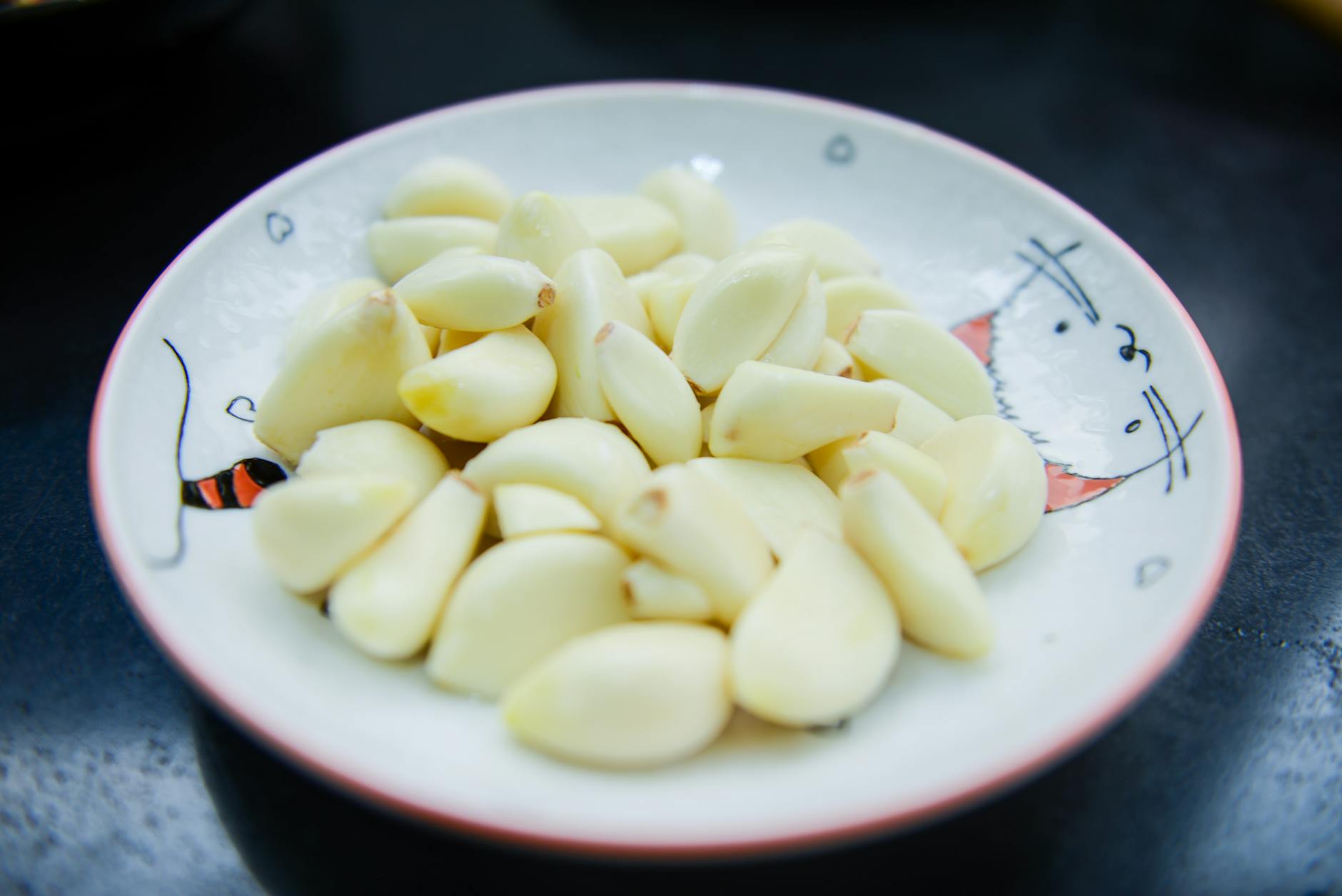
Garlic substitutes
Fresh garlic contributes sharp, pungent allium flavor when raw and a sweet, mellow depth when cooked. It also releases allicin — the compound responsible for its characteristic bite — which transforms significantly depending on how it's prepared. Substituting requires matching both the intensity and the form to the recipe, since a raw-garlic application and a slow-braised one call for very different replacements.
Some links below are paid affiliate links. As an Amazon Associate, AltPantry earns from qualifying purchases at no extra cost to you.
| Rank | Substitute | Substitution ratio | What to expect |
|---|---|---|---|
| #1 | Garlic powder | 1/8 tsp garlic powder per 1 medium fresh clove | The most reliable all-purpose swap — widely tested by King Arthur Baking and America's Test Kitchen — but it lacks the moisture and textural presence of fresh, so it integrates rather than punctuates a dish. |
| #2 | Garlic paste (jarred or tube) | 1/2 tsp garlic paste per 1 medium fresh clove | Closest in moisture content and pungency to fresh minced garlic; works well sautéed or stirred into sauces, though most jarred versions contain citric acid which can add a faint sourness in large quantities. |
| #3 | Granulated garlic | 1/4 tsp granulated garlic per 1 medium fresh clove | Coarser grind than powder, so it disperses more slowly; good for dry rubs and spice blends, but it can leave a slightly gritty texture in smooth sauces. |
| #4 | Shallots | 1 small shallot (about 1 tbsp minced) per 2 medium fresh cloves | Provides allium flavor with a mild, slightly sweet profile; works well raw or lightly cooked but won't replicate the sharp intensity of garlic in cooked-down applications. |
| #5 | Garlic-infused olive oil | 1 tbsp garlic-infused olive oil per 1–2 cloves, used as the cooking fat | Delivers garlic flavor without any solids — useful for those with garlic intolerance to fructans — but adds fat and won't work where garlic is meant to be a visible component or main flavoring agent. |
| #6 | Asafoetida (hing) | 1/8 tsp asafoetida per 2–3 cloves of garlic | A niche but genuinely effective swap in cooked dishes — particularly Indian, lentil, and bean preparations — where it mimics the sulfurous depth of garlic and onion; use sparingly, as it's extremely pungent raw and the flavor mellows significantly in hot oil. Works in a pinch but will be noticeably different in cuisines where it doesn't belong. |
Substituting for a specific recipe?
The best substitute depends on what you're making. Pick your use case:
When to be careful
Any recipe where raw garlic is central — aioli, fresh salsa verde, tzatziki, or garlic-rubbed bruschetta — will not work with powder or paste substitutes; the texture, sharpness, and moisture of fresh cloves are irreplaceable in those contexts. Similarly, whole roasted garlic or dishes built around caramelized garlic cloves have no workable substitute.
Why these substitutes work
Fresh garlic's pungency comes from allicin, which forms only when the cell walls are broken (by crushing or chopping) and the enzyme alliinase contacts alliin. Heat deactivates alliinase quickly, which is why cooked garlic tastes sweet and mild while raw garlic bites. Garlic powder and granulated garlic are made from dehydrated garlic after this reaction has already occurred, so they carry a stabilized, lower-intensity version of the flavor without the same enzymatic sharpness.
For most cooked applications — sautéed aromatics, soups, braises, roasted vegetables — garlic powder or garlic paste will get you close enough that few people will notice. Garlic powder at 1/8 tsp per clove is the most practical everyday swap given how universally available it is and how predictably it performs once heat is involved. Garlic paste is the better choice when the recipe starts by cooking garlic in fat, since it behaves more like fresh in that context.
The further a recipe skews toward raw or barely-cooked garlic, the harder substitution becomes. Aioli, fresh salsa, and cold-dressed dishes depend on allicin’s sharp bite in a way that no dried or infused product can reproduce. If fresh garlic is unavailable for those recipes, it’s better to wait than to substitute.
Frequently asked questions
- How much garlic powder equals one clove of garlic?
- Use 1/8 tsp garlic powder per medium clove. A medium clove is roughly 1 tsp minced. This ratio is consistent across America's Test Kitchen and King Arthur Baking guidance.
- Can I substitute garlic powder for fresh garlic in a marinade?
- Yes, but the result will be noticeably milder and lack the sharpness of fresh. Add it to the wet ingredients so it hydrates and distributes evenly. Increase to 1/4 tsp per clove if the marinade is heavily diluted with liquid.
- Is jarred minced garlic a good substitute for fresh?
- It works in cooked applications — soups, stews, braises — where the difference is minimal after heat exposure. In raw applications or quick sautés where fresh garlic flavor is prominent, jarred minced garlic tastes noticeably more muted and sometimes slightly fermented. Use the same volume (1 tsp jarred ≈ 1 medium clove fresh).