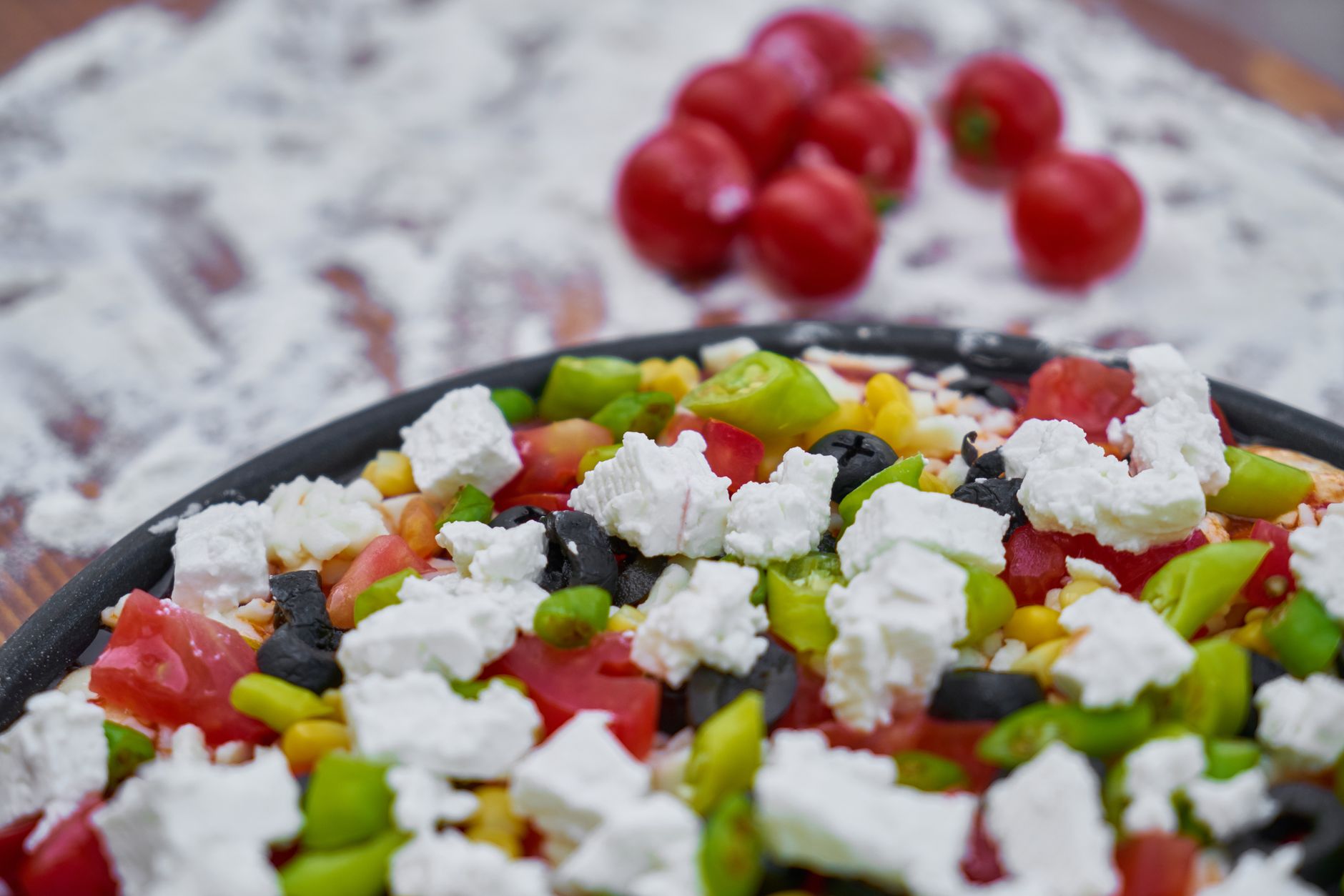
Feta cheese substitutes
Feta contributes three things that are hard to replicate simultaneously: a sharp, briny saltiness, a crumbly-yet-creamy texture, and moderate acidity. In cooked applications like spanakopita or baked eggs, it also melts partially without fully liquefying, holding some structure. Substituting requires choosing which of these properties matters most to your dish — no single alternative nails all three.
Some links below are paid affiliate links. As an Amazon Associate, AltPantry earns from qualifying purchases at no extra cost to you.
| Rank | Substitute | Substitution ratio | What to expect |
|---|---|---|---|
| #1 | Ricotta salata | Equal weight, 1:1 (e.g., 100 g ricotta salata for 100 g feta) | Closest texture match — firm, dry, crumbly — with a mild saltiness; less tangy than feta, so add a small squeeze of lemon juice if acidity matters. |
| #2 | Halloumi cheese | Equal weight, 1:1; dice into small cubes rather than crumbling | Saltiness and briny profile are similar, but halloumi is much denser and rubbery — it won't crumble; works better in cooked dishes than in raw salads. |
| #3 | Goat cheese (chèvre) | Equal weight, 1:1 (e.g., 100 g chèvre for 100 g feta) | Shares feta's tang and acidity almost perfectly, but is softer and creamier rather than crumbly — texture in salads will be clumpier, not scattered; flavor result is the closest of any substitute. |
| #4 | Cotija cheese | Equal weight, 1:1; taste before adding extra salt — cotija is often saltier than feta | Very close crumble and salt level; flavor is less tangy and more milky, so the sharp edge feta brings to Greek salad or pastry fillings will be muted. |
| #5 | Firm tofu (pressed and marinated) | Equal weight, 1:1; marinate pressed tofu in 2 tbsp white wine vinegar + 1 tsp salt + 1 tsp olive oil for at least 30 minutes before using | Works in a pinch for vegan applications — the marinade approximates brine and acidity — but texture is spongier and flavor is noticeably blander; acceptable in cooked grain bowls, less convincing in raw salads. |
When to be careful
If feta is the structural or flavor centerpiece — as in a traditional Greek salad, tiropita, or a dish where its brine is explicitly part of the sauce — no substitute will produce a result most diners would consider equivalent. Melting behavior also differs significantly: feta softens but holds shape in the oven, while goat cheese and tofu behave differently under heat.
Why these substitutes work
Feta is a brined, acid-set cheese with a moisture content around 45–55% and a relatively low fat level compared to aged cheeses, which is why it crumbles rather than melts smoothly. Its sharpness comes from lactic acid produced during fermentation, and its salinity comes from weeks of storage in brine — both of which contribute flavor that mild fresh cheeses lack. Substitutes that are also acid-coagulated (goat cheese, ricotta salata) replicate the tangy flavor chemistry better than rennet-set cheeses, even if their textures diverge.
For most savory applications, ricotta salata is the first substitute to reach for — its dry, crumbly texture and moderate saltiness behave like feta in salads and baked fillings without requiring any modification. When tang is the priority (Greek-style dressings, marinades, grain bowls), goat cheese is the stronger flavor match despite its softer consistency.
If neither is available, cotija crumbles convincingly and is increasingly stocked at mainstream grocery stores. The tofu option is listed for completeness but should be treated as a last resort — the flavor difference is real, and it performs best in heavily seasoned cooked dishes where feta’s brine character would have been partially masked anyway.
Frequently asked questions
- Can I substitute cottage cheese for feta?
- Not reliably. Cottage cheese is much wetter, milder, and lacks feta's acidity and brine flavor. Draining it through a cheesecloth for several hours improves texture somewhat, but the flavor gap remains significant. It is widely listed as a substitute online but rarely produces a result experienced cooks would be satisfied with.
- Which substitute works best in spanakopita?
- Ricotta salata or a 50/50 blend of goat cheese and ricotta (about 75 g of each per 150 g feta called for) both hold up well during baking. Goat cheese alone can make the filling wetter than intended.
- Does the brine from canned olives or capers help if my substitute isn't salty enough?
- Yes — adding 1–2 tsp of olive or caper brine to the dish can compensate for a substitute's lower salinity and add a faint acidic edge. Taste as you go; it's easy to over-salt this way.