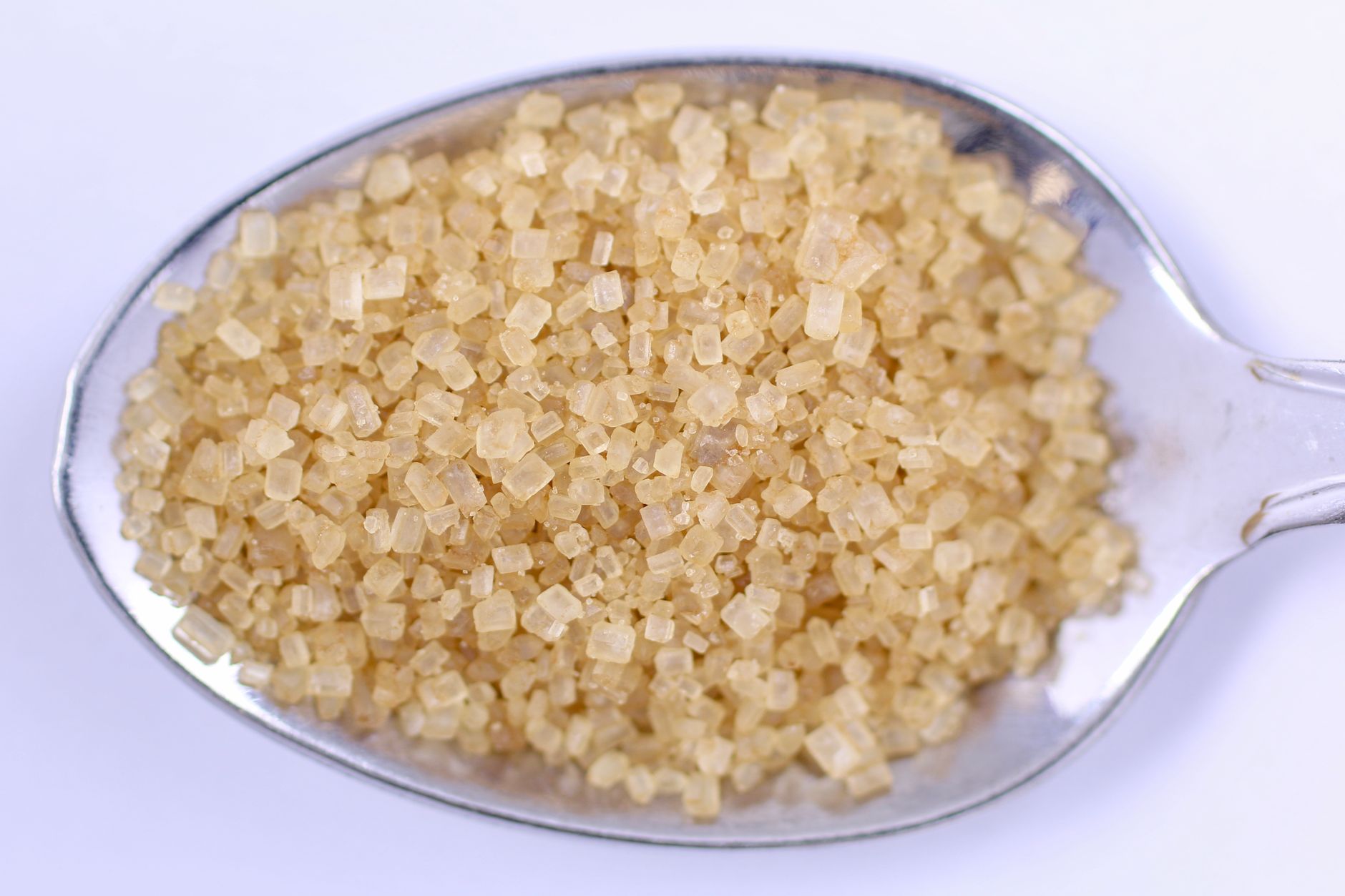
Demerara sugar substitutes
Demerara sugar is a minimally refined cane sugar with large, coarse crystals and a mild toffee flavor from residual molasses. In recipes it serves two distinct roles: a textural topping (the crunchy crust on a crème brûlée, muffin, or shortbread) and a flavoring sweetener in batters, drinks, and sauces. Substituting requires matching both crystal size and molasses depth, and no single substitute does both jobs equally well.
Some links below are paid affiliate links. As an Amazon Associate, AltPantry earns from qualifying purchases at no extra cost to you.
| Rank | Substitute | Substitution ratio | What to expect |
|---|---|---|---|
| #1 | Turbinado sugar | 1:1 by weight or volume | The closest match in crystal size, color, and mild molasses flavor — widely recommended as a direct swap by King Arthur Baking and America's Test Kitchen; works for both topping and dissolving uses. |
| #2 | Raw cane sugar (Sugar in the Raw) | 1:1 by weight or volume | Nearly identical to turbinado in practice — same large crystals and light molasses note — though marketed under different brand names; reliable for toppings and stirring into hot drinks. |
| #3 | Light brown sugar | 1:1 by weight or volume | Delivers similar molasses flavor but has fine, moist crystals that will not form a crunchy topping; works well dissolved into batters, syrups, or sauces where texture is irrelevant. |
| #4 | Granulated white sugar plus molasses | 1 cup (200 g) granulated white sugar + 1 tsp molasses, combined | Replicates demerara's flavor profile more precisely than brown sugar for dissolved applications, but the crystals remain fine; not suitable for crunchy toppings. |
| #5 | Granulated white sugar | 1:1 by weight or volume | Works in a pinch for sweetness in batters and drinks but contributes no molasses flavor and produces a thinner, less golden crust on toppings — a noticeably worse result; use only when flavor depth is not a priority. |
When to be careful
When a recipe depends on demerara's large crystals for visual presentation or a distinctly crunchy baked crust — such as a classic British shortbread topping or a crème brûlée alternative finish — only turbinado or raw cane sugar come close; fine-crystal substitutes will melt into the surface and lose the textural contrast entirely.
Why these substitutes work
Demerara's coarse crystals are larger than standard granulated sugar, so they melt more slowly in the oven and resist full dissolution on a baked surface, creating the characteristic crunch. The residual molasses (roughly 1–3%) contains flavor compounds — primarily furanones and maltol — that contribute a light caramel-toffee note absent in refined white sugar. Turbinado and raw cane sugar retain similar crystal size and comparable molasses levels, which is why they substitute with minimal perceptible difference; brown sugar has equivalent molasses content but the crystals are agglomerated and moist, making them melt quickly under heat.
For most recipes — batters, syrups, drinks, and sauces — turbinado sugar is the substitute to reach for first. It matches demerara closely enough in crystal size and molasses flavor that the difference rarely registers in a finished dish. Raw cane sugar (sold as Sugar in the Raw) is essentially the same product under a different name and is equally reliable.
Where substitution gets harder is in topping applications: if the recipe is counting on a crunchy, amber crust — the kind you get on a Scandinavian butter cookie or a demeraradusted scone — only a coarse-crystal sugar will deliver that result. Light brown sugar and granulated white sugar will melt flat. If turbinado isn’t available and a crunchy top matters, the honest answer is that no common pantry substitute replicates it well; the texture will be different, and that’s worth knowing before you start.
Frequently asked questions
- Can I use demerara sugar and turbinado sugar interchangeably in every recipe?
- Yes, in virtually every practical context. Both are minimally refined large-crystal cane sugars with comparable molasses content. Flavor and texture differences are minor enough that most tasters cannot distinguish them in a finished bake.
- Will light brown sugar work as a demerara substitute in coffee or tea?
- Yes — it dissolves readily and the molasses flavor is a reasonable match. The finer texture is irrelevant in a liquid. Use 1 tsp brown sugar for every 1 tsp demerara called for.
- Can I grind turbinado or raw cane sugar finer to use it like regular sugar?
- You can pulse it briefly in a food processor, but at that point you lose the coarse-crystal advantage. If a recipe needs fine sugar, standard granulated white sugar is a simpler and cheaper choice.