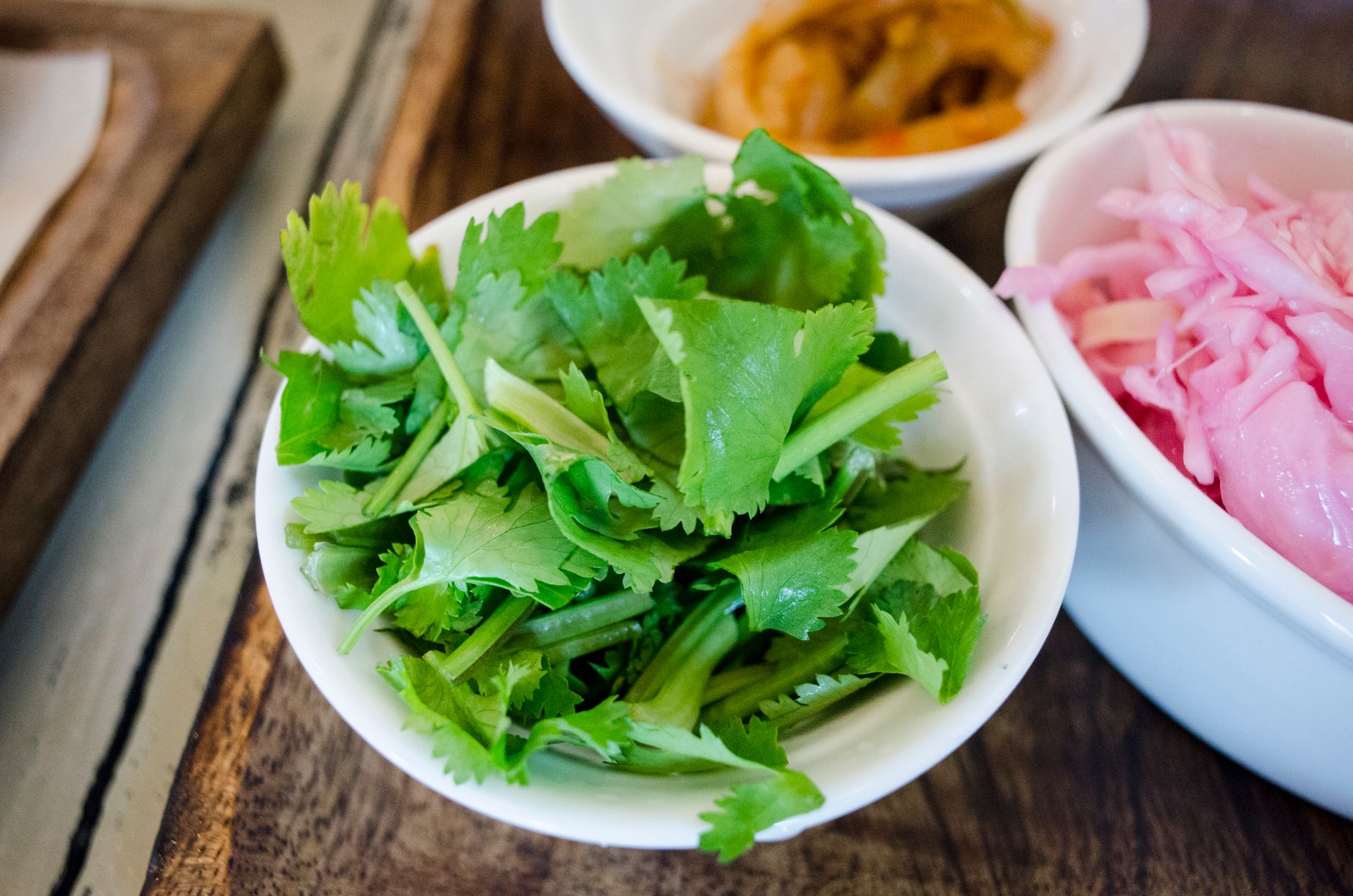
Cilantro substitutes
Cilantro contributes a bright, citrusy, slightly peppery flavor to dishes through its volatile oils — primarily linalool and decanal — and its fresh green bulk adds visual texture to garnishes and raw preparations like pico de gallo and chutneys. No substitute replicates it precisely, because its flavor profile is genuinely unusual among common herbs. Substituting requires accepting a flavor shift, not a perfect match.
Some links below are paid affiliate links. As an Amazon Associate, AltPantry earns from qualifying purchases at no extra cost to you.
| Rank | Substitute | Substitution ratio | What to expect |
|---|---|---|---|
| #1 | Fresh flat-leaf parsley | 1:1 by volume (e.g., 2 tbsp chopped parsley for 2 tbsp chopped cilantro) | Parsley is the most widely recommended swap — it matches the fresh green bulk and visual role, though it lacks cilantro's citrus-soapy notes and reads as more neutral and grassy. Best for cooked dishes and garnishes where appearance matters; the flavor gap is noticeable in raw preparations like salsa cruda. |
| #2 | Fresh Thai basil | Use 3/4 the amount called for (e.g., 1.5 tbsp Thai basil for 2 tbsp cilantro) | Thai basil carries an anise-forward flavor that is assertive enough to anchor Southeast Asian dishes — curries, pho, larb — where cilantro typically appears. It does not substitute well in Mexican or Latin American recipes because the flavor direction is wrong. Reduce quantity slightly as it is more pungent. |
| #3 | Fresh culantro (ngò gai / recao) | Use 1/4 the amount called for (e.g., 0.5 tbsp culantro for 2 tbsp cilantro) | Culantro is a close botanical relative with a flavor similar to cilantro but significantly more intense — roughly 8–10x stronger by most cooks' estimates. It is the most flavor-accurate substitute and is widely used as a direct stand-in in Caribbean, Vietnamese, and Central American cooking. Reduce quantity sharply to avoid overwhelming the dish. |
| #4 | Fresh dill | Use 1/2 the amount called for (e.g., 1 tbsp dill for 2 tbsp cilantro) | Dill shares some of cilantro's bright, fresh character and works adequately in dishes where cilantro plays a supporting garnish role — grain salads, yogurt-based sauces, fish dishes. It is a mediocre substitute in Mexican or South Asian contexts where cilantro is central, because the flavor profiles do not align. |
| #5 | Dried cilantro | 1 tsp dried cilantro for 1 tbsp (3 tsp) fresh chopped cilantro | Dried cilantro is widely available but loses the bulk of the volatile oils that define fresh cilantro's flavor — most food authorities describe it as a noticeably inferior substitute. It works in a pinch in cooked applications like soups, stews, and braised beans where flavor can develop during cooking; do not use it as a fresh garnish replacement. |
When to be careful
If cilantro is the primary flavor in a raw preparation — pico de gallo, Thai herb salads, Vietnamese fresh spring rolls — no substitute fully works because the dish is built around that specific flavor. Cooked applications are more forgiving.
Why these substitutes work
Cilantro's distinctive flavor comes from a mix of aldehydes (primarily decanal, dodecanal, and (E)-2-dodecenal) concentrated in the leaves, along with linalool, a terpene alcohol it shares with coriander seed and some other herbs. These aldehydes are what some people perceive as soapy — a sensitivity linked to a variant in the OR6A2 olfactory receptor gene. Because this aldehyde profile is rare in common culinary herbs, no substitute fully replicates it; parsley and dill approximate cilantro's freshness through different volatile compounds entirely.
Cilantro is one of the harder herbs to substitute because its flavor is chemically distinct from most other common culinary herbs — the gap between cilantro and a parsley-based swap is real and detectable, especially in raw preparations. The substitute table above is ranked by how closely each option approximates cilantro’s function across a range of dishes, with culantro being the most accurate flavor match (when you can find it) and flat-leaf parsley being the most practical everyday stand-in.
For cooked dishes — curries, soups, braises, rice — any substitute in the table will perform adequately, and the flavor difference narrows considerably with heat and time. For raw applications like salsa, herb sauces, or fresh garnishes, adjust your expectations: you are changing the character of the dish, not just swapping one herb for another.
Frequently asked questions
- Can I substitute coriander seed for fresh cilantro?
- Only in cooked dishes, and with very different results. Ground coriander seed shares linalool with cilantro but has a warm, nutty, citrusy flavor rather than a fresh green one. Use 1/4 tsp ground coriander per tablespoon of fresh cilantro called for, only in cooked applications like curries or spice rubs. It does not work as a garnish substitute.
- What is the best cilantro substitute for Thai or Vietnamese dishes?
- Fresh Thai basil is the standard recommendation for Southeast Asian cooking — it is used alongside or instead of cilantro in many Thai and Vietnamese recipes and matches the regional flavor profile. Culantro (ngò gai) is also commonly used in Vietnamese cooking and is a closer flavor match if you can find it.
- Does cilantro taste different to some people, and does that affect what substitute to use?
- Yes. People with a variant in the OR6A2 gene perceive the aldehydes in cilantro as soapy or unpleasant. If you are cooking for someone who dislikes cilantro for this reason, flat-leaf parsley is the safest replacement — it avoids the aldehyde compounds entirely and reads as a neutral fresh herb to most palates.