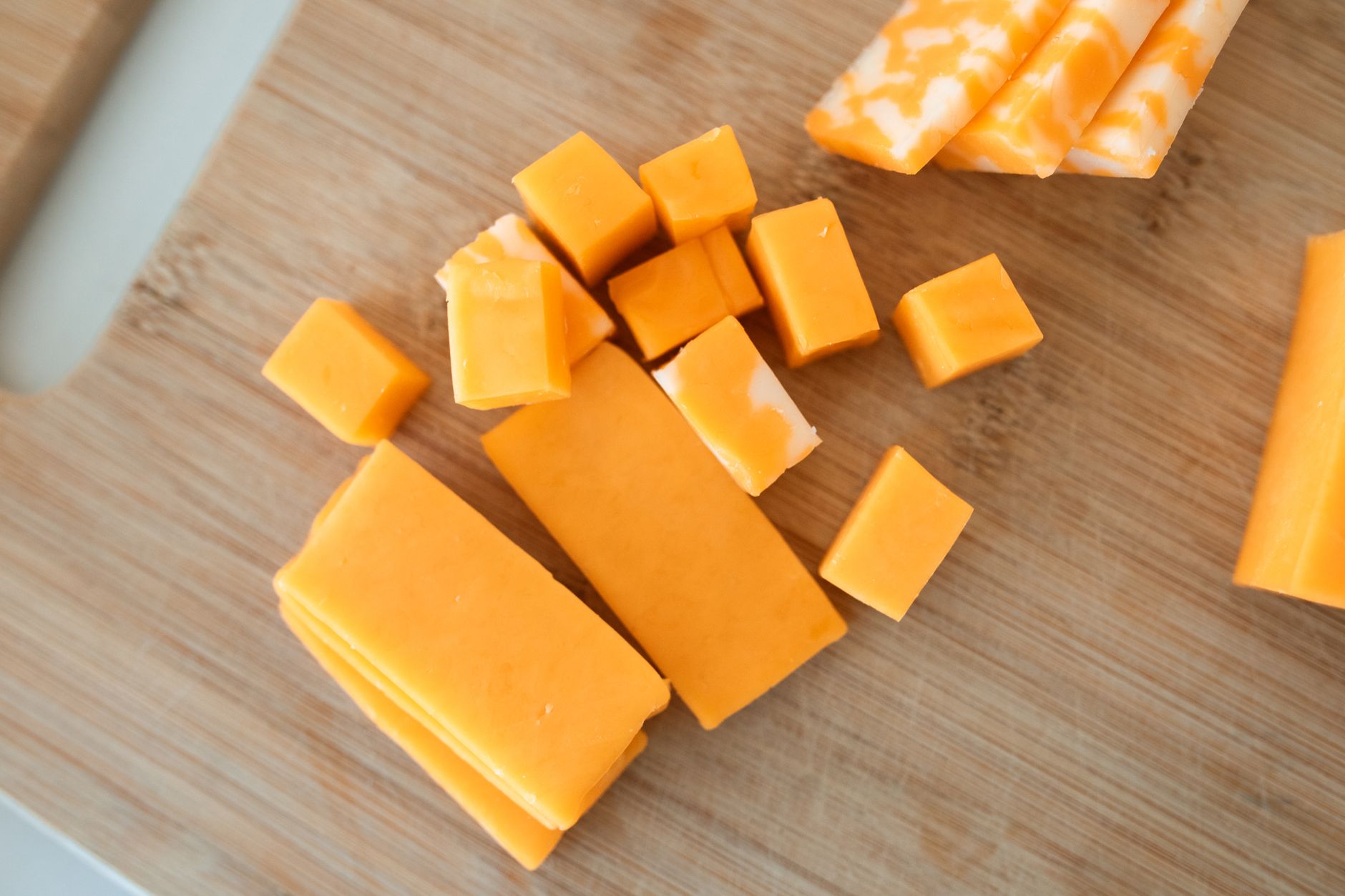
Cheddar cheese substitutes
Cheddar brings a combination of sharp, tangy flavor and reliable melting behavior to recipes. Its relatively high fat content and moderate moisture level let it melt smoothly into sauces, stay cohesive in baked dishes, and provide structural sharpness in cold applications. Substituting requires matching both the flavor profile (acidic, slightly grassy, aged) and the functional properties (melt quality, fat content), which is why most direct swaps work in some contexts but not all.
Some links below are paid affiliate links. As an Amazon Associate, AltPantry earns from qualifying purchases at no extra cost to you.
| Rank | Substitute | Substitution ratio | What to expect |
|---|---|---|---|
| #1 | Colby cheese | 1:1 by weight or volume | Colby is the closest functional and flavor match — milder than cheddar but with near-identical melt behavior and fat content; works in any cooked application with minimal perceptible difference, though cold snacking will taste less sharp. |
| #2 | Monterey Jack cheese | 1:1 by weight or volume | Melts exceptionally well — better than cheddar in some applications like quesadillas or mac and cheese — but the flavor is noticeably milder and less tangy; best when the cheddar's sharpness is not the primary flavor driver. |
| #3 | Gruyère cheese | 1:1 by weight or volume | Stronger, nuttier flavor than cheddar and a superior melting cheese; works well in baked pasta, gratins, and cooked sauces where a rich, savory cheese note is appropriate, but the flavor profile diverges enough that it reads as a different dish. |
| #4 | Colby-Jack cheese | 1:1 by weight or volume | A commercial blend of Colby and Monterey Jack that mirrors cheddar's melt quality and lands roughly between cheddar's sharpness and Monterey Jack's mildness; widely available pre-shredded and a practical everyday swap. |
| #5 | Sharp American cheese slices or American cheese block | 1:1 by weight or volume | American cheese melts more smoothly than cheddar due to added emulsifying salts, making it better for ultra-creamy cheese sauces; the flavor is much less complex and distinctly processed — works in a pinch but noticeably worse in flavor-forward recipes. |
| #6 | Nutritional yeast plus cashew cream | 3 tbsp nutritional yeast + 3/4 cup blended soaked cashews per 4 oz (115g) cheddar | The only dairy-free option with a credible savory, slightly tangy flavor; melt behavior is poor and texture is paste-like rather than stringy, so this only functions in sauces or dips — not in shredded or sliced applications. |
When to be careful
Recipes where aged sharp cheddar is the explicit flavor — such as a well-seasoned cheddar cheese sauce, Welsh rarebit, or a sharp cheddar cracker — will be noticeably different with any milder substitute. Firm cheddar used as a structural element in cold boards or stuffed applications also doesn't have a direct functional replacement that holds and slices the same way.
Why these substitutes work
Cheddar's melt behavior is governed by its fat content (~33%), protein matrix, and moisture level (~37%). During cheddaring, the curds are stacked and turned to expel whey and develop acidity, which denatures proteins and contributes the characteristic sharpness from lactic acid and breakdown products like free fatty acids and sulfur compounds. Substitutes that share similar fat-to-moisture ratios (Colby, Monterey Jack) melt predictably; those with different protein structures (fresh cheeses) or no dairy (nut-based alternatives) behave fundamentally differently under heat.
For most cooked recipes — mac and cheese, quesadillas, casseroles, baked pasta — Colby or Monterey Jack are the substitutes most experienced cooks would reach for without hesitation. They match cheddar’s fat content and melt behavior closely enough that the texture of the finished dish will be nearly identical; the only real tradeoff is reduced sharpness, which matters more in some recipes than others.
If the substitution is for a dairy-free context, the nutritional yeast and cashew cream option in the table is the most credible available, but set realistic expectations: it works in a blended sauce and nowhere else. The substitutes ranked 1–4 in the table are all genuine functional equivalents for heat-based cooking; the gap between them and cheddar is primarily about flavor intensity, not structural failure.
Frequently asked questions
- Can I substitute mozzarella for cheddar?
- In cooked applications, mozzarella melts well but contributes almost no flavor — the result will be stretchy and mild rather than sharp and rich. It's a workable emergency swap for texture, but the dish will taste significantly different. Not recommended if flavor matters.
- Does pre-shredded cheddar behave the same as block cheddar I shred myself?
- Pre-shredded cheddar is coated with anti-caking agents (usually cellulose or potato starch), which inhibit smooth melting. For sauces and gratins, shredding from a block gives a smoother result. For tacos or casseroles where appearance matters less, pre-shredded is fine.
- Can I use mild cheddar in place of sharp cheddar in a recipe?
- Yes, at a 1:1 ratio, but flavor will be noticeably less tangy and complex. In heavily seasoned dishes the difference is minimal; in a standalone cheddar sauce or cheese dip, the dish will read as flat. Adding a small amount of Dijon mustard (1/2 tsp per cup of sauce) can partially compensate.