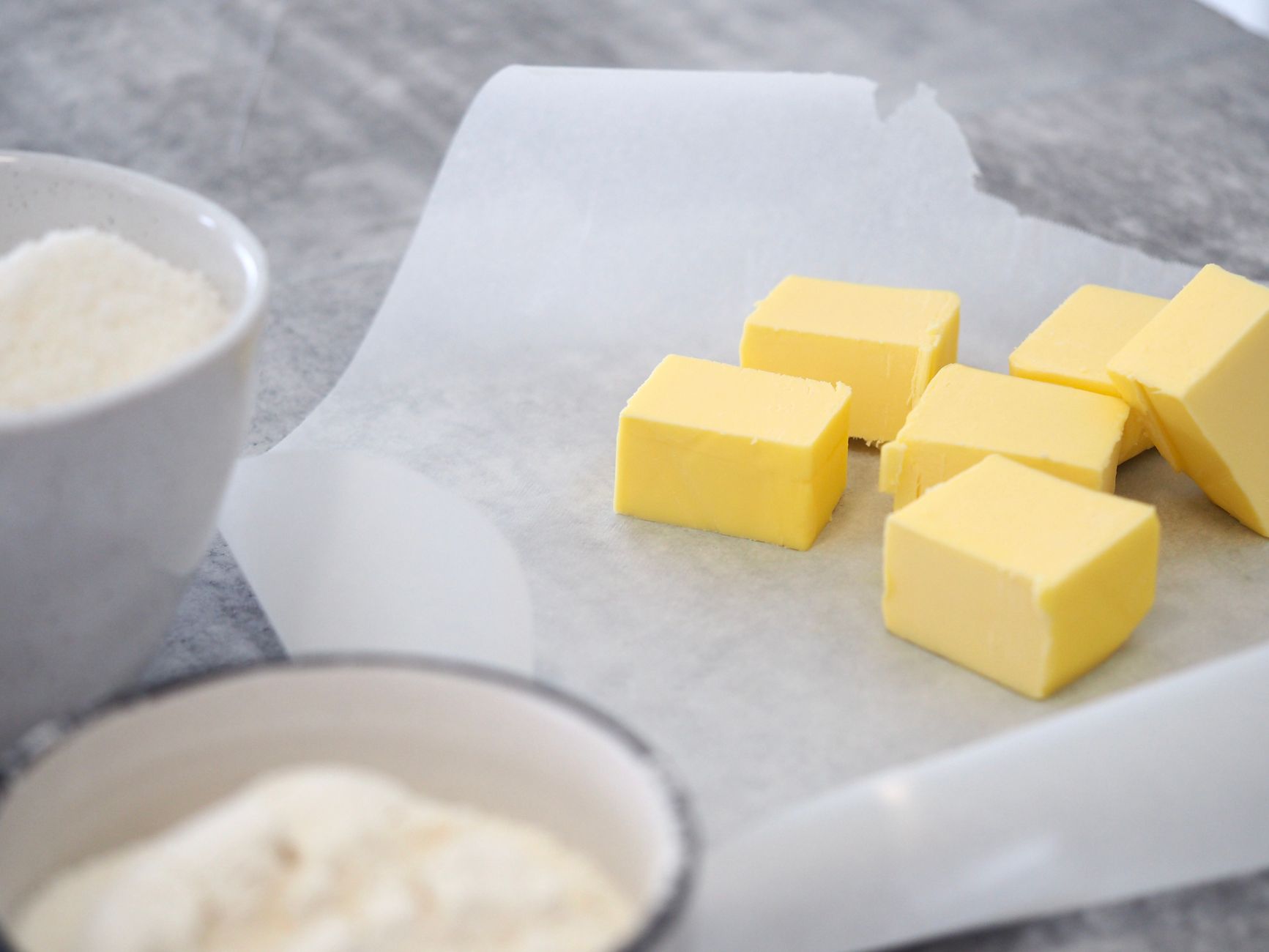
Butter substitutes
Butter contributes fat, moisture, flavor, and structure to recipes simultaneously. In baking, it coats flour proteins to create tenderness, creates steam for lift, and adds the dairy-fat flavor most people associate with finished baked goods. Because butter is roughly 80% fat, 16–18% water, and 2–4% milk solids, swapping it out changes all three variables at once — which is why no single substitute is universally interchangeable.
Some links below are paid affiliate links. As an Amazon Associate, AltPantry earns from qualifying purchases at no extra cost to you.
| Rank | Substitute | Substitution ratio | What to expect |
|---|---|---|---|
| #1 | Coconut oil (refined) | Use 7/8 cup (196g) coconut oil per 1 cup (227g) butter — reduce by about 1 tbsp per cup to account for coconut oil's near-100% fat content | Refined coconut oil is neutral in flavor and solid at room temperature, making it the most structurally similar swap for baking; unrefined adds a detectable coconut flavor that can clash in savory or delicate recipes. |
| #2 | Vegetable shortening | Use 7/8 cup (185g) shortening per 1 cup (227g) butter; add 1/4 tsp fine salt per cup if the recipe relies on butter for seasoning | Shortening replicates butter's solid fat structure almost exactly and is well-tested by America's Test Kitchen and King Arthur Baking for pastry and cookies, though it lacks butter's water content and flavor, so baked goods will taste noticeably blander. |
| #3 | Unsalted margarine (stick-style) | 1 cup (227g) stick margarine for 1 cup (227g) butter, 1:1 | Stick margarine (not tub/spread) has a fat content close enough to butter that it performs reliably in most baked goods; tub margarines contain too much water and air and will deflate cookies and make cakes dense — avoid them for baking. |
| #4 | Neutral vegetable oil or canola oil | Use 3/4 cup (168ml) oil per 1 cup (227g) butter | Oil swaps work well in muffins, quick breads, and cakes where tenderness is more important than structure, but will not cream with sugar, so any recipe that starts with "beat butter and sugar until fluffy" will lose lift and spread differently; also adds no flavor. |
| #5 | Unsweetened applesauce | Replace up to half the butter with an equal volume of applesauce (e.g., 1/2 cup applesauce + 1/2 cup butter for 1 cup butter); full replacement works in a pinch but noticeably degrades texture | Applesauce reduces fat while adding moisture and a faint sweetness; works acceptably in muffins and quick breads but produces a gummy, dense crumb if used as a full replacement — this is a recognized compromise, not a clean swap. |
| #6 | Plain whole-milk Greek yogurt | Use 3/4 cup (170g) Greek yogurt per 1 cup (227g) butter — works only as a partial replacement; best at 1:1 ratio when replacing no more than half the butter | Greek yogurt adds moisture and a slight tang and is widely cited by King Arthur Baking for use in quick breads and muffins; it adds no fat to match butter's richness, so full replacement produces noticeably less tender, more bread-like results. |
Substituting for a specific recipe?
The best substitute depends on what you're making. Pick your use case:
Following a specific diet?
These substitutes are filtered for dietary restrictions:
When to be careful
Laminated doughs (croissants, puff pastry, Danish) and brown-butter applications cannot be substituted — the physical layering depends on butter's precise melting point and plasticity, and the Maillard browning of milk solids is impossible to replicate with any fat listed here. Shortbread is also a borderline case: butter's flavor is so dominant that most substitutes produce a noticeably inferior result.
Why these substitutes work
Butter's ~80% fat content coats gluten strands, limiting their development and producing tenderness; its ~16–18% water turns to steam during baking, contributing lift. The milk solids (casein and lactose) brown via the Maillard reaction and caramelization, generating butter's characteristic cooked flavor. Substitutes that match the fat percentage (coconut oil, shortening, stick margarine) replicate the structural role most faithfully, while water-heavy or fat-poor substitutes (applesauce, yogurt) compromise one or both functions.
Butter is one of the harder ingredients to substitute cleanly because it contributes fat, water, flavor, and structure at the same time. For most everyday baking — muffins, cookies, quick breads — refined coconut oil or stick margarine will get you close without noticeable failure. For sautéing and pan sauces, neutral oils work fine for the cooking function, though you’ll lose the flavor that browned butter solids provide.
The substitutes above are ranked by how closely they replicate butter’s structural and flavor role, not by how easy they are to find. If you’re working around a dairy allergy rather than just an empty fridge, stick-style vegan butters (not listed above because they’re a product category rather than a pantry staple) are increasingly well-reviewed by Cook’s Illustrated and King Arthur Baking as near-equivalent replacements at 1:1 by weight — worth seeking out if baking results matter.
Frequently asked questions
- Can I use olive oil instead of butter?
- Yes, but only in savory recipes or strongly flavored baked goods where its grassy, fruity flavor won't clash. Use 3/4 cup olive oil per 1 cup butter. It is not recommended for neutral or sweet baked goods — the flavor is detectably different.
- Does the substitute change if butter is being melted (vs. creamed)?
- Yes. For melted-butter applications (brownies, some cakes, sautéing), neutral oil or coconut oil substitutes most cleanly. For creamed-butter applications (layer cakes, most cookies), you need a solid fat — stick margarine, shortening, or solid coconut oil — or the recipe loses the air incorporated during creaming.
- Can I substitute butter with a dairy-free option in frosting?
- Stick-style vegan butter (such as Earth Balance Buttery Sticks or Miyoko's Creamery Cultured Vegan Butter) is the most consistently recommended swap for buttercream frosting; use 1:1 by weight. Shortening works structurally but produces a greasier, flavorless frosting most people find inferior.