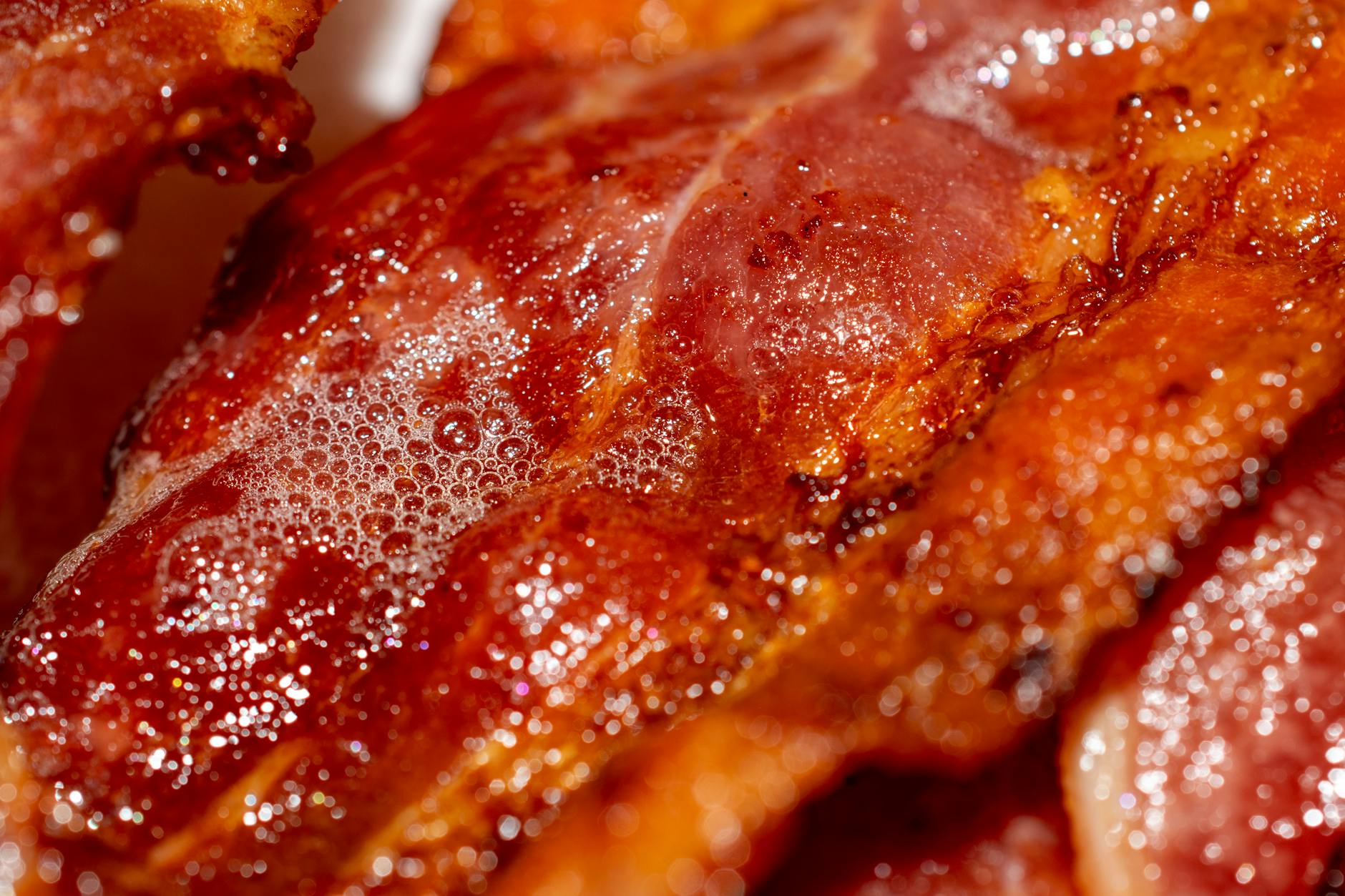
Bacon fat substitutes
Bacon fat contributes three things at once: a high smoke point suitable for searing and frying, saturated fat that produces flaky pastry and tender cornbread crumb, and a distinctly smoky, porky flavor that no neutral fat replicates. Substituting requires deciding which of those three properties matters most in your recipe. When smoke point and fat structure matter but flavor is secondary, lard or butter are reliable swaps; when the smoky-savory flavor is the point, no substitute fully covers it.
Some links below are paid affiliate links. As an Amazon Associate, AltPantry earns from qualifying purchases at no extra cost to you.
| Rank | Substitute | Substitution ratio | What to expect |
|---|---|---|---|
| #1 | Lard | 1:1 by volume or weight | Lard matches bacon fat's saturated fat content and smoke point almost exactly, producing the same flaky biscuits, tender pie crusts, and clean sear — without the smoke flavor; widely recommended by King Arthur Baking and America's Test Kitchen as the functionally closest swap. |
| #2 | Unsalted butter | 1:1 by volume (reduce added salt in recipe slightly) | Butter replicates the richness and fat structure in baking and low-heat sautéing but has a lower smoke point (~350°F vs. ~375°F for bacon fat), so it burns at high heat; adds dairy flavor rather than pork flavor, which is noticeable in savory applications. |
| #3 | Coconut oil | 1:1 by volume | Refined coconut oil is a workable neutral-fat substitute for high-heat frying and sautéing due to its comparable smoke point (~400°F); unrefined coconut oil adds a distinct coconut flavor that conflicts with most savory recipes, so use only refined here. |
| #4 | Vegetable shortening | 1:1 by volume | Shortening matches the saturated fat structure that produces flaky baked goods and has a high smoke point, but it is flavorless and lacks the savory depth of bacon fat; works in a pinch for biscuits or pie crust but the result is noticeably blander. |
| #5 | Smoked paprika plus neutral oil | 1 tbsp neutral oil (such as canola oil or grapeseed oil) + 1/4 tsp smoked paprika per tablespoon of bacon fat | This combination approximates the smoky character of bacon fat for pan sauces, vinaigrettes, and bean dishes where the flavor is the primary reason for using bacon fat; the texture and fat structure are not equivalent, and it will not behave correctly in baking. |
When to be careful
In recipes where bacon fat is the defining flavor — Southern-style green beans, refried beans cooked in rendered pork fat, or pan drippings-based gravies — no substitute produces an equivalent result; the smoky, cured-pork taste is irreplaceable without actual bacon or another cured pork product. Similarly, if a recipe relies on bacon fat for a very high-heat sear (above 400°F), butter will burn and should not be used.
Why these substitutes work
Bacon fat is roughly 40% saturated fat, 45% monounsaturated fat, and 10% polyunsaturated fat, along with water-soluble flavor compounds (including nitrosamines from curing and Maillard-derived smoke compounds) that are released during rendering. The saturated fat content is what shortens gluten strands in baked goods, producing flakiness — which is why lard and shortening replicate that structural role so well. The flavor compounds are volatile and unique to cured pork; they cannot be replicated by any plant-based fat alone, only approximated with smoked ingredients added separately.
Bacon fat is used in small amounts in most recipes — typically 1 to 3 tablespoons — which means the right substitute depends heavily on why the recipe calls for it. If the fat is there to grease a skillet, prevent sticking, or provide richness to biscuit dough, lard is the straightforward swap and most experienced cooks would reach for it first. If the recipe is counting on that smoky, cured-pork flavor (as in a pot of slow-cooked beans or a wilted greens sauté), no fat-only substitute fully covers the gap — the smoked paprika and oil combination in the table is the closest practical workaround, not an equivalent.
Butter is the most commonly available option in most home kitchens and it performs well in baking and low-to-medium-heat cooking; just account for its lower smoke point and dairy flavor. Avoid it for anything requiring sustained high heat. Coconut oil and vegetable shortening are functionally reliable but flavorless, which makes them better suited to baked goods than to savory pan applications where the fat’s flavor is part of the dish.
Frequently asked questions
- Can I use olive oil instead of bacon fat?
- Olive oil works as a cooking fat in terms of heat transfer, but it has a distinctly different flavor profile and a lower smoke point than bacon fat. It will not produce the same result in baking, and the flavor difference is noticeable in most savory applications. It is a functional swap in a strict pinch for light sautéing, but it is not a recommended substitute.
- Is there a substitute that replicates the smoky flavor for vegetarians?
- Smoked paprika added to a neutral oil comes closest for flavor-forward applications like beans or vinaigrettes. Liquid smoke (used in very small amounts — 1 to 2 drops per tablespoon of fat) combined with vegetable oil can also approximate the smoke character, but liquid smoke is easy to overuse and the result can taste artificial if overdone.
- How long does saved bacon fat keep, and does that affect whether I need a substitute?
- Properly strained and refrigerated bacon fat keeps for about 1 month in the refrigerator and up to 1 year in the freezer. If you cook bacon regularly, saving the rendered fat in a sealed jar is more reliable than substituting — the substitute list here is for situations where you have none on hand and cannot render any.